Buying a PSA oxygen plant in Paraguay.
In 2022 and 2023 Paraguay’s Ministry of Health ran a World Bank financed tender for hospital PSA oxygen plants, and its documents are public on the DNCP portal. This guide sets out six points from them and from Resolution 208/2009, as read on 19 November 2026, and what to check before you buy.
Six points before you buy.
Each point comes from the documents of tender 402407 on the DNCP portal, from Resolution S.G. 208/2009 and from two other public sources, opened and read on 19 November 2026. This page is a summary, not legal advice.
| Point | What the document says |
|---|---|
| 1. The tender | Tender 402407, World Bank financed, five hospital lots, published 1 November 2022 and awarded. |
| 2. The plant and the test | Duplex PSA of at least 40 Nm³/h, oxygen of at least 93%, backup manifolds and a 96 hour run. |
| 3. Who could bid | Two plants in five years, two certified technicians, sales volume in the bidder’s own name, a representative in Paraguay. |
| 4. After handover | 160 days to install, 24 months of warranty, 48 months of maintenance and 36 hours of training. |
| 5. The rule and the portal | Resolution 208/2009 and the DNCP supplier register. |
| 6. Keeping plants running | An IPS maintenance tender and an EpiC brief on the Ministry’s 41 plants. |
Tender 402407, read on the portal.
Paraguay’s Ministry of Health ran a World Bank financed international tender for hospital PSA oxygen plants, and its documents are public.
Tender 402407 was run by the Ministry of Public Health and Social Welfare through its World Bank project unit (loan 8963-PY). The DNCP page shows it published on 1 November 2022, with questions closing on 10 January 2023 and bids due on 4 July 2023 at 10:00. The final bid date has passed, and the page lists the tender as awarded (Adjudicada) when read on 19 November 2026.
The call is governed by the World Bank’s procurement regulations for borrowers in investment projects. The page lists a bid security of 3%, a bid-securing declaration set out in the tender document, an advance payment of 10% for the awardee, award by lot and the restrictions of Article 40 of Law 2051/03.
Addendum No. 11, published on 15 June 2023, set out five lots of one PSA installation each (listed as one item per lot), at hospitals in San Lorenzo (the Acosta Ñu paediatric hospital), Santa Rosa del Aguaray, Coronel Oviedo, San Juan Bautista in Misiones and the San Pablo maternal and child hospital. It replaced the Concepción and Ciudad del Este regional hospitals of the first list.
- Buyer
- Ministry of Public Health and Social Welfare
- Unit
- World Bank project unit, loan 8963-PY
- Procedure
- International public tender (LPI)
- Published
- 1 November 2022
- Final bid date
- 4 July 2023, passed
- State when read
- Awarded, 19 November 2026
- Lots
- Five, one PSA installation each
This page does not name any bidder or awardee and gives no bid prices. The portal publishes the opening minutes and the addenda numbered up to 11.
The plant, the backup and the test.
Addendum No. 11 describes a duplex PSA generator with backup manifolds, a 96 hour acceptance run and a purpose-built room.
The generator is a duplex PSA of at least 40 Nm³/h at 75 PSI for each PSA. In reply to a bidder, the Ministry said each lot asked for two plants of at least 40 Nm³/h, which makes 80 Nm³/h installed. The electronic item list had described the oxygen as 96% ± 3%. The reply was that the equipment must reach a minimum of 93%, and Addendum No. 11 replaced the wording “93% ± 3%” with “at least 93%”.
The control panel was to cut the PSA supply and send the oxygen stored in the backup manifolds when purity fell below 93%, when pressure fell below the set minimum or when a high carbon monoxide level was registered. The plant was to run automatically without supervision, with on-site alarms and maintenance reminders. Delivery was tied to a 96 hour continuous run at full capacity, checking production, oxygen concentration, automatic stop and start, valves and alarms.
The PSA was to be installed in a room built by the bidder only for that purpose, and the Ministry said plants installed in containers were not accepted. Addendum No. 11 also asked for a concrete base, a roof and a fenced enclosure with access gates for the plant and the emergency generator. The air dryer was to be a refrigerant type designed for ambient air up to 50 °C and inlet air up to 50 °C, or else sized with the manufacturer’s correction factor, with the table included in the bid.
- Generator
- Duplex PSA, at least 40 Nm³/h at 75 PSI each PSA
- Purity
- At least 93%, replacing “93% ± 3%”
- Backup
- Manifolds take over below 93%, low pressure or high CO
- Acceptance
- 96 hours continuous, at full capacity
- Flow meter
- Mass flowmeter with totaliser, sized for the two PSA
- Electrical
- 380/3/50 Hz from the national utility, online UPS for the control panel
These are one buyer’s requirements for five hospitals, not a Paraguayan rule.
Who could bid, and how.
The qualification criteria asked for experience, trained technicians and sales volume in the bidder’s own name.
The buyer first looked for the lowest evaluated bid and then checked it against the criteria in a post-qualification step. The clause says requirements not listed in it could not be used to judge a bidder. Bidders could quote for one lot, several or all five.
After Addendum No. 11 the criteria were two medical PSA oxygen plants supplied, installed and commissioned in the last five years (2018 to 2022, moved from 2017 to 2021), at least two technicians assigned to the contract with training certificates in installation, commissioning, maintenance and biosafety, and a minimum annual sales volume of Gs. 32,200,000,000 for each lot quoted, in two of the last five years, shown with five audited balance sheets. The clause says the capacity counts as the bidder’s own, not that of its parent company or group. A consortium could combine its members’ experience and sales.
For foreign suppliers the replies are specific. Bids were delivered on paper in a sealed envelope. The currencies of the bid and of payment were the same, quoted in guaraníes for local costs, with no more than three foreign currencies besides the guaraní. An international company that won the contract needed a technical and legal representative installed in Paraguay. When bidders asked that the experience of the manufacturer or a parent company count, the Ministry replied that the experience had to be shown by the individual bidder.
- Experience
- Two medical PSA plants in five years
- Staff
- Two certified technicians
- Sales volume
- Gs. 32,200,000,000 per lot, two years of five
- Whose capacity
- The bidder’s own, or the consortium combined
- Submission
- Paper, sealed envelope
- Local presence
- Technical and legal representative in Paraguay
What experience did Paraguay’s 2023 PSA tender ask of bidders?
After handover: warranty, maintenance, certificates.
The related services run from commissioning, and the specification lists the certificates a model must hold.
For each lot, the list of related services in Addendum No. 11 asks for assembly, installation and commissioning within 160 days of signing the contract, a written warranty of 24 months from commissioning for technical failures of the components, a preventive and/or corrective maintenance service for 48 months from commissioning, and 36 hours of training for the people responsible for maintenance, given during installation and commissioning.
The addendum replaced a clause of 24 months of preventive maintenance with 48 months of preventive and/or corrective maintenance. The clause adds that the maintenance includes the supplies and the damaged spare parts needed to keep the plant working, whatever the cause of the failure, and that manuals are delivered in Spanish. Several bidders asked for more than 160 days and were told to follow the tender document.
Under “Quality certifications”, the model offered was to meet a pharmacopoeia and medical devices directive (MDD 93/42/EEC) certification in line with Resolution 208/09, the pressure equipment directive 2014/68/EU, ISO 13485, ISO 9001 and ISO 14001. Other certifications, such as ISO 45001 or 2006/42/EC, could be added but did not exclude a bid. Asked whether all were compulsory, the Ministry replied that certificates were to be presented as set in Addendum No. 5 of 22 February 2023, with catalogues and copies of the certificates showing the offered models meet the regulations.
- Installation
- 160 days from signing the contract
- Warranty
- 24 months, written, from commissioning
- Maintenance
- 48 months, preventive and/or corrective
- Training
- 36 hours for maintenance staff
- Manuals
- Operation and maintenance, in Spanish
- Certificates
- MDD 93/42/EEC, 2014/68/EU, ISO 13485, 9001, 14001
The maintenance clause covers the 48 months and says nothing on spare parts after them, and this page does not say whether another certificate would have been accepted.
What warranty and training did Paraguay’s PSA tender ask for?
The rule and the portal.
Resolution 208/2009 treats medical gases as medicines, and public tenders run on the DNCP portal.
Resolution S.G. 208/2009 of the Ministry of Public Health and Social Welfare, dated 23 April 2009, declares that medical gases are medicines for human use (Article 1) and covers their representation, import, production, marketing and distribution (Article 2). Article 3 names oxygen and nitrous oxide and says medical gases can be made industrially or with air concentrators with a molecular sieve (PSA). Article 4 applies quality assurance and good manufacturing practices to gases made by the cryogenic method or by PSA, and names the USP, the European and the French Codex.
Article 5 says establishments covered by the resolution need the Ministry’s authorisation (habilitación) before they operate, and Article 7 gives compliance to the National Directorate of Health Surveillance. The four published pages do not mention a hospital’s own plant separately, and they say nothing on a laboratory or a responsible pharmacist. Whether a given plant needs the authorisation is for the health authority to say.
On DNCP’s “Cómo vender al Estado” page, any person, legal entity or consortium can sell to the State, and the first requirement is registration in the Registro de Proveedores del Estado. The registration page says DNCP Resolution 2939/2024 regulates the register, which evolved from the earlier SIPE system. Neither page says anything specific about foreign suppliers, so read the registration guides and the tender documents themselves.
- Issued by
- Ministry of Public Health and Social Welfare
- Dated
- Asunción, 23 April 2009
- Copy read
- dinavisa.gov.py, 19 November 2026
- Medical gases
- Medicines for human use, Article 1
- PSA
- Named in Articles 3 and 4
- Authorisation
- Before operating, Article 5
- Supplier register
- Registro de Proveedores del Estado
We read the resolution as published on the DINAVISA website and did not check later changes to the rule or the institutions.
Keeping a plant running in public hospitals.
Two public sources show how Paraguayan buyers think about maintenance after the plant is installed.
The social security institute IPS published tender LPN 78/24 (DNCP ID 451537) on 2 October 2024 for preventive and corrective maintenance, with spare parts on demand, of medical gas generating equipment at its hospitals. Questions closed on 31 October 2024 and bids were due on 7 November 2024, so the date has passed. On 9 October 2024 a bidder asked IPS to remove the requirement for an authorisation from the manufacturer. IPS replied on 29 October 2024 that it was indispensable, with four reasons: quality and compatibility, access to the manufacturer’s specialists and original parts, protection against counterfeit or low-quality products, and equal conditions for all bidders. In tender LPN 06-24, published on 26 June 2024 with bids due on 19 August 2024, the same request only drew a pointer to the latest tender document.
A December 2024 brief by FHI 360 on the USAID funded EpiC project reports that the project developed Paraguay’s first standard operating procedures for PSA plants, that more than 100 operators and administrators were trained, and that maintenance kits were distributed to all 41 Ministry plants. The brief is a project summary by the implementer, not a Ministry document, and it names challenges that remain: financing to maintain the plants and investing in the workforce.
- IPS tender
- LPN 78/24, ID 451537, published 2 October 2024
- Bids due
- 7 November 2024, passed
- IPS reply
- 29 October 2024, authorisation kept
- EpiC brief
- FHI 360, December 2024
- Ministry plants
- 41 with maintenance kits
The IPS position is one buyer’s, not a Paraguayan rule.
Did a Paraguayan maintenance tender keep manufacturer authorisation?
Four things to put in writing.
They follow from the six points above and apply to every supplier you compare.
Check the date and the state.
Tender 402407 is closed and awarded. Ask the Ministry, or watch the DNCP portal, for any new call, and read its addenda and the replies to bidders, which hold clauses the first document does not.
Read the purity wording.
The tender moved from 93% ± 3% to at least 93%, and a bidder had to ask about a 96% line in the item list. Ask how your own tender words purity and how it is measured.
Plan the room and the heat.
This tender asked for a room built for the plant, a concrete base, a fenced enclosure and an air dryer for air up to 50 °C. Give the manufacturer the real site conditions and the power supply, with any generator.
Price the years after handover.
The Ministry asked for 48 months of maintenance with the damaged spare parts included, and for a representative in Paraguay. Ask who services the plant, and with which parts, once that period ends.
How ULTRAOX specifies purity and size.
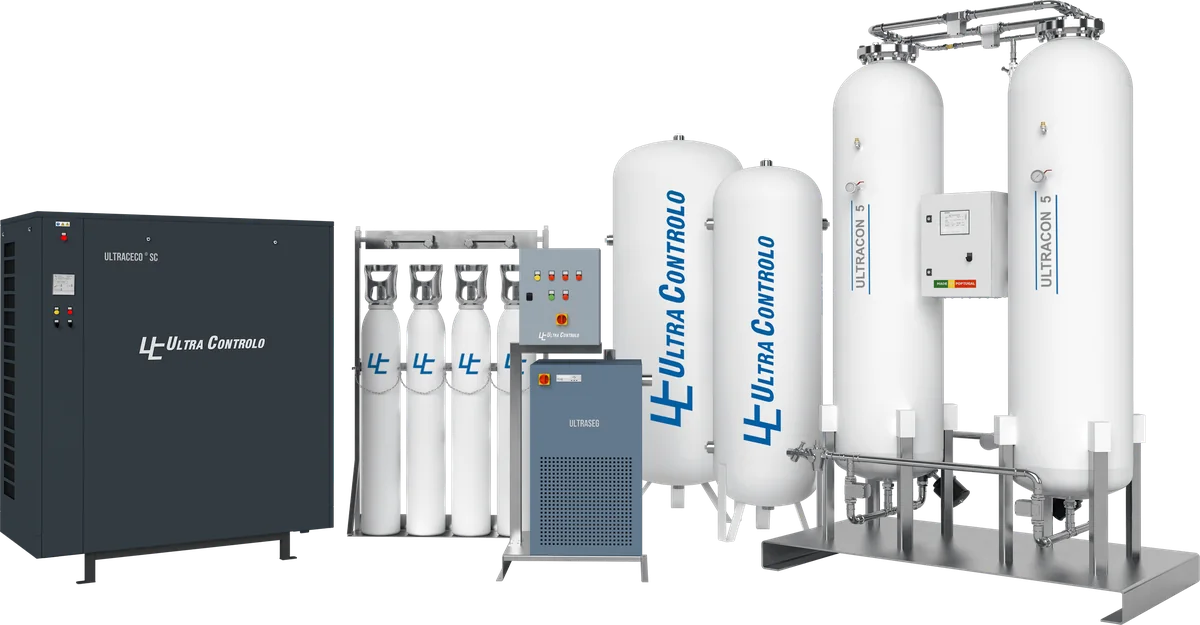
Ultra Controlo is a Portuguese company that designs and manufactures medical gas systems for hospitals.
ULTRAOX plants deliver 93% ± 3% oxygen. ULTRAOX plant models range from 3.10 Nm³/h of oxygen on ULTRAOX 30 to 165.3 Nm³/h on ULTRAOX 1640, delivered at 5 to 6 bar; each plant has one or two ULTRACON oxygen generators.
This page does not say whether any plant meets the requirements of tender 402407 or those of Paraguay’s health authority. That is for the contracting authority and the health authority to confirm.
- PSA oxygen range
- ULTRAOX SC, ULTRAOX ST and ULTRAOX CO plants, with ULTRACON oxygen generators
- Oxygen grade
- Oxygen 93, 93% ± 3%
- Medical device
- CE 1639, Class IIb, the whole plant as one medical device
- Built to
- EN ISO 7396-1
- Quality system
- ISO 13485:2016, ISO 9001:2015 and ISO 14001
Who ran Paraguay’s 2023 World Bank financed tender for PSA oxygen plants?
Paraguay’s Ministry of Public Health and Social Welfare, through its World Bank project unit, in international tender 402407. The DNCP portal shows it published on 1 November 2022, with a final bid date of 4 July 2023 that has passed, and lists it as awarded when read on 19 November 2026. Addendum No. 11 lists five hospital lots, one PSA installation each.
What capacity and purity did the tender ask for?
Addendum No. 11 asks for a duplex PSA generator of at least 40 Nm³/h at 75 PSI for each PSA, with oxygen of at least 93%. In its reply to bidders the Ministry said each lot asked for two plants of at least 40 Nm³/h, 80 Nm³/h installed. Delivery was tied to a 96 hour continuous run at full capacity.
What experience did bidders have to show?
Two medical PSA oxygen plants supplied, installed and commissioned in the last five years, two technicians with training certificates, and a minimum annual sales volume of Gs. 32,200,000,000 for each lot quoted, in two of the last five years. The replies say the experience of subsidiaries, parent companies and affiliates was not taken into account.
Could a foreign company bid in the 2023 tender?
The tender followed the World Bank’s procurement regulations and was an international tender. Bids were delivered on paper in a sealed envelope, and an international company that won needed a technical and legal representative installed in Paraguay. The currency of the bid and of payment were the same, with no more than three foreign currencies besides the guaraní.
What warranty and maintenance did the tender ask for?
For each lot, Addendum No. 11 asks for installation within 160 days of signing the contract, a written warranty of 24 months from commissioning, preventive and/or corrective maintenance for 48 months from commissioning, and 36 hours of training for the people responsible for maintenance.
Does a Paraguayan hospital need a licence to produce oxygen?
Resolution S.G. 208/2009 of the Ministry of Public Health and Social Welfare treats medical gases as medicines for human use. Article 3 says they can be made by PSA concentrators, and Article 5 says establishments covered by the resolution need the Ministry’s authorisation (habilitación) before they operate. Whether a given hospital plant needs it is for the health authority to say.
Where are Paraguayan public tenders published?
On the DNCP portal of the national public procurement directorate. Each tender page lists the buyer, the dates and the state, with tabs for items, documents, publication history and published questions. DNCP’s supplier page says anyone who wants to sell to the State must first register in the Registro de Proveedores del Estado.
Did a Paraguayan maintenance tender keep the manufacturer’s authorisation?
In tender LPN 78/24 of the social security institute IPS, a bidder asked on 9 October 2024 for the requirement to be removed. IPS replied on 29 October 2024 that it was indispensable, giving four reasons, and told bidders to follow the tender document. It is one buyer’s position, not a Paraguayan rule.
What documents does Ultra Controlo provide for a tender?
ULTRAOX oxygen plants carry CE marking as Class IIb medical devices through notified body 1639 (SGS), with the whole plant certified as a single medical device, and are built to EN ISO 7396-1. For tenders, Ultra Controlo provides its certificates, CE declarations of conformity and technical dossiers.
Who services an ULTRAOX plant after handover?
UltraCare is Ultra Controlo’s technical assistance programme for its medical gas systems, available 24 hours a day, 365 days a year. It covers preventive maintenance and monitoring, corrective service, original spare parts and rental equipment while a unit is serviced.
ULTRAOX is designed for a minimum life cycle of 150,000 hours, which Ultra Controlo presents as an investment for at least 20 years.
Ready to discuss oxygen for your hospital?
Tell us about your site. Our engineering team sizes the configuration and sends a quote.