How to choose a PSA oxygen generator.
To choose a PSA oxygen generator, compare suppliers on ten points: the oxygen grade, medical device certification, capacity, compressors, backup, purity monitoring, energy use, site conditions, cylinder filling and long-term service.
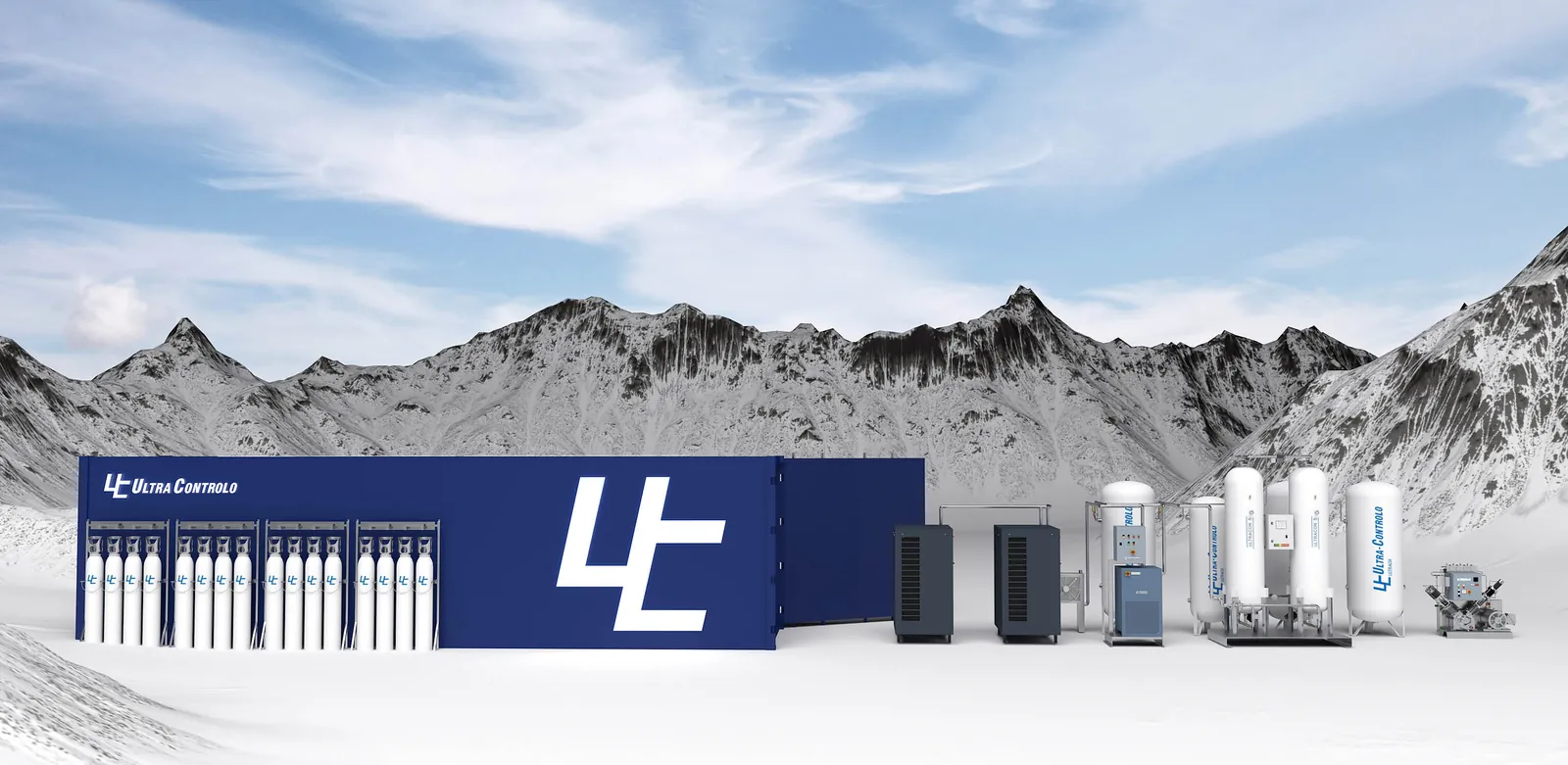
Ten questions before you buy.
Ask every PSA oxygen generator manufacturer the same ten questions, in writing, and compare the answers side by side.
| Check | What to ask the manufacturer |
|---|---|
| 1. Oxygen grade | Which pharmacopoeia monograph does the oxygen meet? |
| 2. Certification | Is the whole plant CE marked as a medical device, and in which class? |
| 3. Capacity | Which flow in Nm³/h is guaranteed, and can capacity be added later? |
| 4. Compressors | Oil-less or oil-injected, and how often are they serviced? |
| 5. Backup | How does the plant hand over to the backup supply? |
| 6. Monitoring | How is purity measured, displayed and alarmed? |
| 7. Energy | How many kWh per Nm³, at what purity and pressure? |
| 8. Site and climate | What does the site need, and how do heat, dust and altitude change the plant? |
| 9. Cylinder filling | Can the plant fill cylinders, and how many a day? |
| 10. Service | Who trains the technicians, supplies the spare parts and keeps the plant running? |
The oxygen grade.
Ask which pharmacopoeia monograph the oxygen meets, not only its percentage.
Single-stage PSA plants such as ULTRAOX produce Oxygen 93, a medical oxygen with its own monographs in the European Pharmacopoeia (Oxygen (93 per cent), 2455) and the US Pharmacopeia (Oxygen 93 Percent).
It contains 90.0% to 96.0% oxygen by volume, the rest mostly argon and nitrogen. Oxygen made by cryogenic distillation, delivered as liquid or in cylinders, follows a different monograph, Oxygen (0417), at 99.5% or more.
The World Health Organization published technical specifications for PSA oxygen plants in June 2020. Where Oxygen 93 may be used depends on national rules, so hospitals should confirm them with their health authority.
- Purity
- 93% ± 3%
- Grade
- Oxygen 93
- CO2
- < 300 ppm
- CO
- < 5 ppm
- Oxygen dew point
- −50 °C
Medical device certification.
Ask for the CE certificate and the class of the complete plant, not only of the parts.
A plant assembled from certified parts is not the same as a plant certified as one medical device. Ask for the certificate number, the notified body, the declaration of conformity and the manufacturer’s quality system certificate.
ULTRAOX oxygen plants carry CE marking as Class IIb medical devices through notified body 1639 (SGS), with the whole plant certified as a single medical device, and are built to EN ISO 7396-1. For tenders, Ultra Controlo provides its certificates, CE declarations of conformity and technical dossiers.
Capacity, sized to your demand.
Size the generator on the hospital’s oxygen demand, measured or estimated, then check that capacity can grow without replacing the plant.
Ask for the guaranteed flow in Nm³/h at the stated purity and outlet pressure. If the plant will also fill cylinders, give the cylinder size and how many cylinders a day.
ULTRAOX plant models range from 3.10 Nm³/h of oxygen on ULTRAOX 30 to 165.3 Nm³/h on ULTRAOX 1640, delivered at 5 to 6 bar; each plant has one or two ULTRACON oxygen generators.
Plants are modular: one or more generators and compressors are combined to match the hospital’s demand, and capacity can be added later without replacing what is already installed. To size a plant, Ultra Controlo needs the oxygen flow required in m³/h or, for cylinder filling, the size and number of cylinders to fill per day.
The compressors.
The compressors decide the air treatment, the service intervals and much of the running cost.
Ask whether the compressors are oil-less or oil-injected, how the air is filtered before the PSA columns, and how often each compressor needs service.
ULTRAOX SC uses oil-less ULTRACECO compressors. ULTRAOX ST uses ULTRASCREW rotary screw compressors. ULTRAOX treats the air before the PSA with a water separator with electronic drain, micro and sub-micro filters and an activated carbon filter.
Service intervals depend on the compressors: ULTRAOX SC, with oil-less ULTRACECO compressors, needs one service every 10,000 hours.
What happens when it stops.
Ask how the plant hands over to the backup supply, and whether that needs an operator.
The hospital stays on oxygen: an ULTRAOX plant connects to the network as one source among others, and if its production drifts outside specification, the network’s automatic changeover moves the supply to the secondary source, such as a cylinder bank, with no operator action.
Inside the plant, the Siemens controller switches compressors and generators in cascade to keep pressure stable. Every alarm has a potential-free contact for remote signalling, and an optional control box passes information to the building management system (BMS).
Purity monitoring.
Ask how purity is measured, how often, and what the plant does when purity drifts.
The ULTRAOX touch screen, run by a Siemens PLC, shows oxygen purity, flow and total volume produced, oxygen pressure, air quality, equipment status, the next maintenance due, a log of every incident, and alarms.
The plant alarms at 90% purity and, below 90%, shuts off the oxygen flow and purges.
On ULTRAOX SC, purity is measured by one or two zirconium oxide analysers. For more parameters, Ultra Controlo’s QuPHARM wall-mounted analyser, launched in May 2026, measures up to four parameters at once: oxygen, carbon monoxide, carbon dioxide and, as an option, moisture.
Energy per Nm³.
Compare energy use at the same purity and the same pressure, because electricity is a major running cost of a PSA plant.
Each extra bar of compressor pressure adds about 7% to electricity use. ULTRAOX takes in air above 7.5 bar and delivers oxygen at 5 to 6 bar.
Site and climate.
Heat, humidity, dust, altitude and the power supply all change what a PSA plant needs, so give the manufacturer the real site conditions.
For an ULTRAOX plant, the hospital provides a clean, level area reachable by a crane, a drain for condensate, anchoring for the equipment, three-phase power and the licences to install and operate it.
The ambient air must be reasonably free of dust, at an acceptable humidity and free of chemical contamination, the area must not be classed as electrically hazardous, and no one may smoke within 10 metres of the plant. The plant can run from a diesel generator, and the existing oxygen installation can stay in place: ULTRAOX connects to it as a new source.
A containerised oxygen plant is a complete PSA plant built inside a shipping container and delivered ready to connect; Ultra Controlo’s version is ULTRAOX CO.
Cylinder filling.
If the hospital or the region needs cylinders, plan the filling station with the plant, not after it.
Connect ULTRAFIL to ULTRAOX and fill your own medical oxygen cylinders on site.
An ULTRAFIL filling station takes racks of 5, 10 or 20 cylinders and fills them at a maximum pressure of 150 to 207 bar, depending on the model.
Service for the life of the plant.
Ask who trains your technicians, where spare parts come from and what the service covers.
ULTRAOX is designed for a minimum life cycle of 150,000 hours, which Ultra Controlo presents as an investment for at least 20 years.
UltraCare is Ultra Controlo’s technical assistance programme for its medical gas systems, available 24 hours a day, 365 days a year. It covers preventive maintenance and monitoring, corrective service, original spare parts and rental equipment while a unit is serviced.
ULTRAOX plants leave the factory pre-wired, parameterised and tested, ready to start on site, and on large plants Ultra Controlo’s factory technicians supervise installation, start-up and staff training.
Common questions about choosing a PSA generator.
Questions hospitals ask us about on-site oxygen. More on the medical gas answers page.
What should I compare when buying a PSA oxygen generator?
To choose a PSA oxygen generator, compare suppliers on ten points: the oxygen grade, medical device certification, capacity, compressors, backup, purity monitoring, energy use, site conditions, cylinder filling and long-term service.
What purity is PSA oxygen, and is it medical grade?
Single-stage PSA plants such as ULTRAOX produce Oxygen 93, a medical oxygen with its own monographs in the European Pharmacopoeia (Oxygen (93 per cent), 2455) and the US Pharmacopeia (Oxygen 93 Percent).
It contains 90.0% to 96.0% oxygen by volume, the rest mostly argon and nitrogen. ULTRAOX SC and ST plants deliver 93% ± 3% oxygen to European Pharmacopoeia quality; their datasheets give residual contents at initial operation of CO2 below 300 ppm, CO below 5 ppm and an oxygen dew point of −50 °C. Oxygen made by cryogenic distillation, delivered as liquid or in cylinders, follows a different monograph, Oxygen (0417), at 99.5% or more.
What happens if the oxygen plant stops?
The hospital stays on oxygen: an ULTRAOX plant connects to the network as one source among others, and if its production drifts outside specification, the network’s automatic changeover moves the supply to the secondary source, such as a cylinder bank, with no operator action.
Inside the plant, the Siemens controller switches compressors and generators in cascade to keep pressure stable. Every alarm has a potential-free contact for remote signalling, and an optional control box passes information to the building management system (BMS).
How long does a PSA oxygen plant last?
ULTRAOX is designed for a minimum life cycle of 150,000 hours, which Ultra Controlo presents as an investment for at least 20 years.
Its PSA cycles are widely spaced, which means fewer valve operations and less wear, and in good conditions the zeolite can last 10 years or more before it needs replacing. Service intervals depend on the compressors: ULTRAOX SC, with oil-less ULTRACECO compressors, needs one service every 10,000 hours.
What is a containerised oxygen plant, and when is it used?
A containerised oxygen plant is a complete PSA plant built inside a shipping container and delivered ready to connect; Ultra Controlo’s version is ULTRAOX CO.
It suits sites with no technical room or no space for civil works. The site provides level ground reachable by a crane, a drain for condensate, anchoring and three-phase power, and the plant can run from a diesel generator. Ultra Controlo builds medical air the same way: an ULTRAAR ME containerised medical air system left its factory for a hospital in Milan in July 2026.
Is Ultra Controlo a manufacturer or a distributor of PSA oxygen generators?
Ultra Controlo is the manufacturer. It designs ULTRAOX PSA oxygen plants and ULTRACON oxygen generators, and assembles and tests them in its own factories in Portugal.
Ready to discuss oxygen for your hospital?
Tell us about your site. Our engineering team sizes the configuration and sends a quote.