PSA oxygen plant maintenance.
UltraCare is Ultra Controlo’s technical assistance programme for its medical gas systems, and it aims to keep the equipment working 24/7. This page sets out what maintaining a PSA oxygen plant involves and what Ultra Controlo documents say about servicing ULTRAOX.
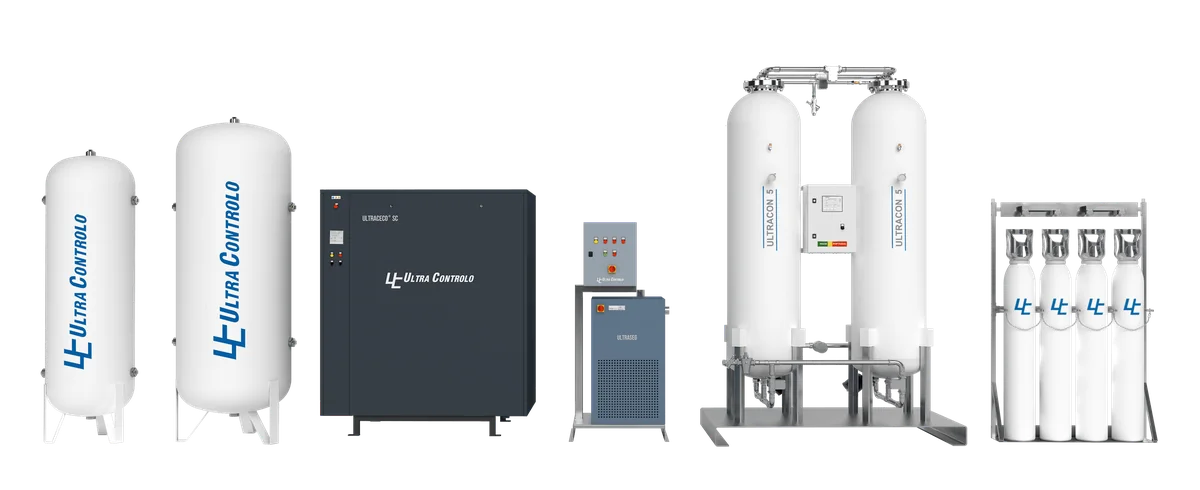
What a PSA plant needs.
PATH and CHAI (2021) describe two kinds of PSA plant maintenance: preventive, which is scheduled, and corrective, which follows a failure.
Preventive maintenance can include cleaning or replacing filters, draining water or oil traps, replacing lubricants and calibrating pressure and oxygen sensors. Corrective maintenance may require rebuilding a valve assembly or compressor.
- Service programme
- UltraCare
- Support
- Aims to keep the equipment working 24/7
- ULTRAOX SC
- One service at 10,000 hours
- Monitoring
- Installation post-monitoring system under ISO 13485
- Life cycle
- Minimum 150,000 hours
The PSA oxygen range.
UltraCare covers preventive maintenance, corrective service, original spare parts and emergency support. ULTRAOX plants are built around ULTRACON oxygen concentrators with two molecular sieve columns.
ULTRAOX SC
Oil-less ULTRACECO compressors.
View ULTRAOX SCULTRAOX ST
ULTRASCREW rotary screw compressors.
View ULTRAOX STULTRAOX CO
A complete plant inside a shipping container, for sites with no technical room.
View ULTRAOXOne service at 10,000 hours.
The ULTRAOX SC datasheet states that the plant has one service at 10,000 hours.
The ULTRAOX datasheet describes a touch screen and PLC that show, among other things, the next maintenance due and a record of contingencies and alarms.
Support after commissioning.
Preventive and corrective.
UltraCare covers preventive maintenance, corrective service, original spare parts and emergency support.
Trained on the plant.
Ultra Controlo selects and trains technicians in each country and runs post-installation monitoring under ISO 13485.
Built for 150,000 hours.
A minimum life cycle that Ultra Controlo presents as an investment for at least 20 years, and in good conditions the zeolite can last 10 years or more.
What a service agreement should settle.
Guidance from the Global Fund, WHO and UNDP on what a service agreement for a PSA oxygen plant should cover.
| Topic | What the guidance says | Source |
|---|---|---|
| Service intervals | Frequency of service by hours of operation or calendar dates, or both; whether intervals vary for different pieces of equipment; who schedules the visits | Global Fund and BHI, service contract guidelines (20 May 2024) |
| Costs | Whether the costs of labour, travel and accommodation for the provider’s agents are included in the fee or billed separately | Global Fund and BHI, service contract guidelines (20 May 2024) |
| Verification | Detailed service reports with photographs; hospital staff receiving spent or replaced parts; plant operators invited to observe the service | Global Fund and BHI, service contract guidelines (20 May 2024) |
| Spare parts and consumables | Where they are stored and who keeps the inventory records | Global Fund and BHI, service contract guidelines (20 May 2024) |
| Emergency repairs | Whether part replacement, freight, labour, accommodation and travel are included, and the process for initiating and authorising the repair | Global Fund and BHI, service contract guidelines (20 May 2024) |
| Remote support | The supplier’s hours of operation for remote support, the response timeframe, and the steps and escalation if the supplier does not respond | Global Fund and BHI, service contract guidelines (20 May 2024) |
| After-sales service | WHO suggests a service level agreement with a qualified provider authorised by the manufacturer, with terms and duration, itemised costs, time to response for remote support and on-site intervention, the time critical spares take to reach the point of intervention, and record keeping | WHO, technical specifications (31 December 2024), line 42 |
| Warranty and maintenance | UNDP says maintenance services must include a warranty covering a minimum of two years, encompassing preventative and corrective maintenance services, refresher training and spare parts | UNDP, REQ-OXY-001 (effective 1 January 2025), section 6.5 |
Six things to settle for a PSA plant.
Drawn from the UNDP requirements for oxygen plants and WHO’s technical specifications.
Follow the manufacturer’s schedule
UNDP says the preventive maintenance schedule should follow the manufacturer’s recommendations, with routine inspections, filter cleaning, part replacement and control system calibration.
Equip the operators
UNDP says operators should have a maintenance toolkit with an oxygen analyser, testing and mechanical tools, and protective equipment.
Plan the spare parts
UNDP says spare part kits must be available throughout the plant’s lifespan, with a list of part numbers, descriptions and quantities. WHO’s specifications ask for spare parts to be available for a minimum of 10 years from acceptance.
Put response times in writing
UNDP says the service level agreement must specify response times for emergency repairs, maintenance intervals and spare parts availability.
Keep a log
UNDP says the end user should maintain a log of all maintenance activities to track system health and performance over time.
Agree the training
WHO’s specifications say certifications of trainers by the original manufacturer, and the content and delivery of training, should be agreed before a service contract is signed.
Questions buyers ask about PSA maintenance.
More on the medical gas answers page.
What maintenance does a PSA oxygen plant need?
PATH and CHAI (2021) say preventive (scheduled) maintenance can include cleaning or replacing filters, draining water or oil traps, replacing lubricants and calibrating pressure and oxygen sensors, and that corrective maintenance may require rebuilding a valve assembly or compressor after a failure.
UNDP’s REQ-OXY-001 (effective 1 January 2025) says the end user, in collaboration with the supplier, should implement a preventive maintenance schedule according to the manufacturer’s recommendations, including routine inspections, filter cleaning, part replacement and control system calibration.
Who should service a PSA oxygen plant?
WHO’s technical specifications for health facility based medical oxygen systems (31 December 2024) suggest a service level agreement with a qualified provider authorised by the manufacturer of the equipment.
The Global Fund and Build Health International warranty guidelines (20 May 2024) say the warranty is void if maintenance is conducted by hospital staff or others not trained by the manufacturer.
How often does an ULTRAOX SC plant need servicing?
The ULTRAOX SC datasheet states that the plant has one service at 10,000 hours. The ULTRAOX datasheet (2022) gives a minimum life cycle of 150,000 hours.
What does UltraCare cover?
UltraCare is Ultra Controlo’s technical assistance programme for its medical gas systems, and it aims to keep the equipment working 24/7.
The Industrial 2026 catalogue describes it as preventive maintenance, corrective service, original spare parts and emergency support.
What should a service agreement specify?
UNDP says the service level agreement must specify response times for emergency repairs, scheduled maintenance intervals, spare parts availability and technical support responsibilities, including remote diagnostics, on-site troubleshooting and staff training.
What spare parts should be kept for a PSA plant?
PATH and CHAI (2021) say that in many settings a stockpile of manufacturer-recommended spare parts is advised to ensure interruptions remain short, and UNDP says spare part kits must be available throughout the plant’s lifespan.
Does Ultra Controlo train plant operators?
Yes: on large plants Ultra Controlo’s factory technicians supervise installation, start-up and staff training, and the company runs medical gas training for hospital clinical and technical teams.
How do I request service or a quote?
Email leads@ultra-controlo.com or call +351 219 154 350 with the gases you need, the site and the demand.
Ready to discuss oxygen for your hospital?
Tell us about your site. Our engineering team sizes the configuration and sends a quote.