Buying a PSA oxygen plant in Ecuador.
Ecuador’s 2023 national medical oxygen strategy is written for the hospitals of the Ministry of Public Health (MSP). It is a guidance document, and it treats PSA plants as an option for remote places after an evaluation. This guide sets out five points from it, as read on 19 November 2026, and what to check before you buy.
Five points before you buy.
Each point comes from the Estrategia Nacional de Oxígeno Medicinal, Ecuador 2023, in the copy hosted on stoppneumonia.org, opened and read on 19 November 2026. This page is a summary, not legal advice.
| Point | What the document says |
|---|---|
| 1. A guide, not a rule | The strategy calls itself a guidance instrument for the MSP hospital subsystem and lists the national rules in force separately. |
| 2. What the diagnostic found | Cylinders dominate. Only 18% of establishments use cryogenic tanks and one, in Galápagos, has an oxygen production plant. |
| 3. Where PSA plants fit | A complementary system for hard-to-reach places after a technical, geographical and economic evaluation. Own plants are generally not feasible. |
| 4. Purity and quality | Medicinal oxygen is acceptable up to 93% purity. Suppliers using processing plants should follow the good manufacturing practice regulation. |
| 5. Maintenance and training | A maintenance axis with contract terms to specify, and a training axis that starts from 57% of establishments with no recent training. |
A guide, not a rule.
The strategy describes itself as a guidance instrument, so read it as context for a tender and not as a specification.
The Estrategia Nacional de Oxígeno Medicinal states that it is a guidance instrument to strengthen the management of the supply of oxygen and other medical gases for the hospitals of the MSP subsystem. It is built on five axes: training, infrastructure and equipment, preventive and corrective maintenance, supply planning, and normative and regulatory elements.
Its legal framework section lists the national rules it considers in force, among them Acuerdo No. 0763, the regulation on good manufacturing practices for the manufacture, filling, storage and distribution of medical gases, and Acuerdo Ministerial No. 00099-2020, a manual on the maintenance of sanitary infrastructure. It names NFPA 99 as the main international standard in use.
- Title
- Estrategia de Oxígeno Medicinal Ecuador 2023
- Scope
- Hospitals of the Ministry of Public Health (MSP) subsystem
- Length
- 52 pages
- Publication date
- Not stated in the text
- Copy read
- stoppneumonia.org, 19 November 2026
No later edition of the strategy was checked.
What the diagnostic found.
The diagnostic describes a supply built on cylinders, with very few production plants.
The diagnostic reports that only 18% of establishments use a cryogenic tank system and that only one establishment, in Galápagos, has an oxygen production plant. It also reports that 24% of establishments have no cylinder central, and that among those that do, 41% of the cylinders belong to the external supplier and 35% are the establishment’s own.
In hospitals that keep a cryogenic tank, monthly consumption runs from 100 cubic metres to 10,000 kilograms of liquid oxygen. The cylinder shares the strategy reports (59% with integrated valve, 31% manifold banks, 32% without valve) add up to more than 100% in the original, so read them as separate figures and not as a split.
- Cryogenic tanks
- 18%
- Production plant
- One establishment, in Galápagos
- No cylinder central
- 24%
- Cylinders owned by the external supplier
- 41%, among those with a central
- Cylinders owned by the establishment
- 35%, among those with a central
The figures come from a questionnaire the strategy credits to CHAI and the MSP in 2023.
Where PSA plants fit.
The strategy lists PSA plants for hard-to-reach places, and elsewhere calls a hospital’s own plants generally not feasible.
In the infrastructure and equipment axis, PSA production plants appear among the complementary systems, next to cylinders for hard-to-reach areas, refill centres and oxygen concentrators. The condition attached to them is a technical, geographical and economic evaluation.
The diagnostic is more cautious. It says that keeping own oxygen processing plants is not feasible, for three reasons: the trained staff to operate and maintain them are not available, the initial investment is considerably high, and without continuous monitoring or evaluation the purity could be compromised. It adds that installing plants could be justified in remote localities, such as the Amazon regions and the Galápagos Islands, and the conclusions say that distant localities make it necessary to consider alternatives such as local processing plants or cylinders with integrated valves.
- Infrastructure axis
- PSA plants as a complementary system, after technical, geographical and economic evaluation
- Diagnostic
- Own plants generally not feasible, with exceptions in remote localities
- Conclusions
- Local processing plants listed as an alternative
- Places named
- The Amazon regions and the Galápagos Islands
These passages describe how the strategy frames PSA plants. They set no distance, bed count or technical threshold.
Purity and quality.
The strategy recognises oxygen of up to 93% purity as acceptable and puts the quality burden on the supplier’s maintenance and good manufacturing practice.
In the diagnostic, the strategy recognises that medicinal oxygen is acceptable up to 93% purity. It adds that suppliers who use processing plants should be checked for constant maintenance of their facilities and equipment, and for good manufacturing practices under the regulation on the manufacture, filling, storage and distribution of medical gases.
The strategy names ARCSA, the national agency for regulation, control and sanitary surveillance, as the country’s sanitary control body. It also reproduces article 137 of the Organic Health Law, under which medical devices, made in Ecuador or abroad, are subject to a sanitary registration for import, sale and dispensing. It does not say whether a PSA plant falls under that article, so ask the contracting authority.
- Purity
- Acceptable up to 93%
- Good manufacturing practice
- Acuerdo No. 0763
- Main international standard
- NFPA 99
- Sanitary control body
- ARCSA
- Device registration
- Article 137, Organic Health Law, as reproduced
This page does not set out Ecuador’s registration rules in full, because we have read them only as the strategy reproduces them.
Maintenance, training and planning.
Three of the five axes concern what happens around the plant once it is delivered.
The maintenance axis calls for rigorous preventive maintenance programmes following the manufacturer’s recommendations, and says some tasks must be done periodically even if a plant is not running continuously, for reasons such as lower demand, a lack of power or few operators. For corrective maintenance, it says contract terms can specify expected response times, including the waiting time for spare parts, remote support and the availability of a local agent. Both passages cite WHO 2023.
The training axis starts from the finding that 57% of establishments have had no recent training in the use of medical oxygen. The planning axis advises avoiding over- or under-sizing the oxygen source and testing scenarios that include the auxiliary requirements, such as infrastructure, power supply and trained staff.
- Preventive maintenance
- Rigorous programmes, following the manufacturer
- Corrective contracts
- Response times, spare parts waiting time, remote support, local agent
- Training
- 57% of establishments with no recent training
- Planning
- Avoid over- and under-sizing the source
Four things to put in writing.
They follow from the five points above and apply to every supplier you compare.
Which rule the tender follows.
Ask the contracting authority which technical specification the purchase follows, since the strategy is guidance. Ask what registration a PSA plant needs, and which body checks it.
The evaluation behind a plant.
If the site is remote, ask for the technical, geographical and economic evaluation the strategy mentions, and for the cost of the staff and maintenance that the plant needs.
The maintenance terms.
Ask for a preventive maintenance programme that follows the manufacturer, and for response times, spare parts lead time, remote support and a local agent in the contract.
The site conditions.
Give the manufacturer the real site conditions: heat, humidity, dust, altitude and the power supply, with any generator, and ask for the trained staff and training in the offer.
How ULTRAOX specifies purity.
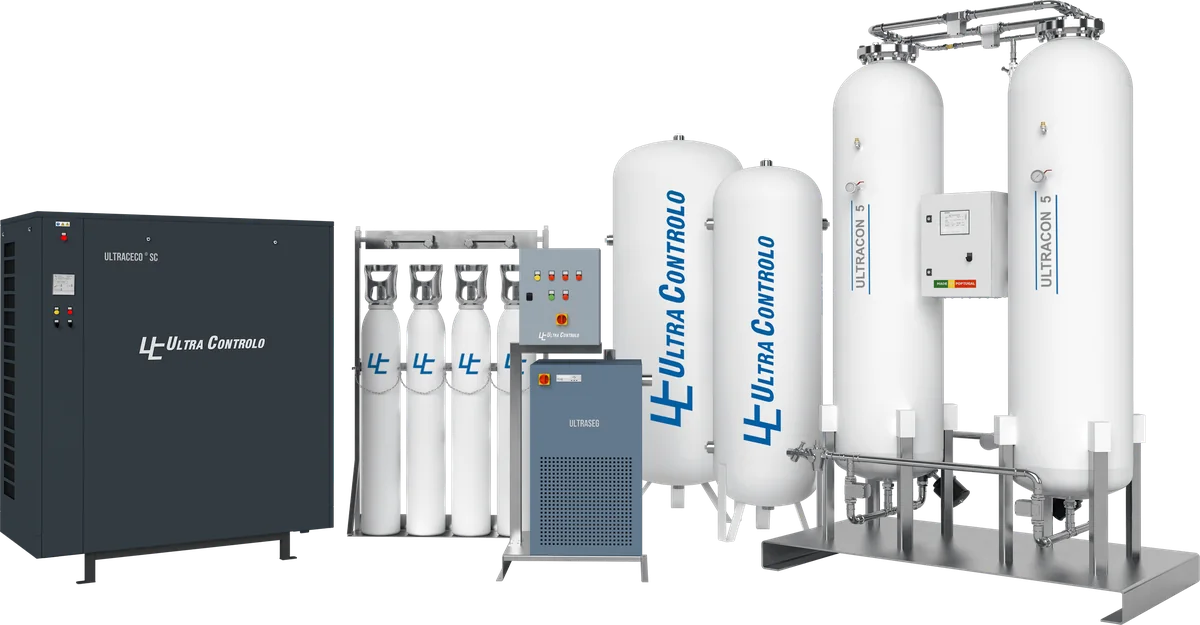
Ultra Controlo is a Portuguese company that designs and manufactures medical gas systems for hospitals.
ULTRAOX plants deliver 93% ± 3% oxygen.
This page does not say whether any plant meets Ecuadorian requirements. That is for the contracting authority and the health authorities to confirm.
- PSA oxygen range
- ULTRAOX SC, ULTRAOX ST and ULTRAOX CO plants, with ULTRACON oxygen generators
- Oxygen grade
- Oxygen 93, 93% ± 3%
- Medical device
- CE 1639, Class IIb, the whole plant as one medical device
- Built to
- EN ISO 7396-1
- Quality system
- ISO 13485:2016, ISO 9001:2015 and ISO 14001
Is Ecuador’s oxygen strategy a binding regulation?
No. The strategy describes itself as a guidance instrument for the hospitals of the Ministry of Public Health subsystem. Its legal framework section lists the national rules in force separately, among them Acuerdo No. 0763 on good manufacturing practices for medical gases.
Does the strategy allow PSA plants in Ecuadorian hospitals?
It does not rule them out. The infrastructure axis lists PSA production plants as a complementary system for hard-to-reach places, after a technical, geographical and economic evaluation. The diagnostic says that keeping own plants is generally not feasible, and names the Amazon regions and the Galápagos Islands as places where installing plants could be justified.
How many Ecuadorian establishments make their own oxygen?
According to the strategy’s diagnostic, only one establishment, in Galápagos, has an oxygen production plant. The same diagnostic reports that only 18% of establishments use a cryogenic tank system and that 24% have no cylinder central.
What oxygen purity does the strategy accept?
The strategy recognises that medicinal oxygen is acceptable up to 93% purity. It adds that suppliers who use processing plants should be checked for constant maintenance of their equipment and for good manufacturing practices.
What documents does Ultra Controlo provide for a tender?
ULTRAOX oxygen plants carry CE marking as Class IIb medical devices through notified body 1639 (SGS), with the whole plant certified as a single medical device, and are built to EN ISO 7396-1. For tenders, Ultra Controlo provides its certificates, CE declarations of conformity and technical dossiers.
Who services an ULTRAOX plant after handover?
UltraCare is Ultra Controlo’s technical assistance programme for its medical gas systems, available 24 hours a day, 365 days a year. It covers preventive maintenance and monitoring, corrective service, original spare parts and rental equipment while a unit is serviced.
ULTRAOX is designed for a minimum life cycle of 150,000 hours, which Ultra Controlo presents as an investment for at least 20 years.
Ready to discuss oxygen for your hospital?
Tell us about your site. Our engineering team sizes the configuration and sends a quote.