Buying a PSA oxygen plant in Colombia.
Colombia’s Resolution 4410 of 2009 is the technical regulation for medical gases, and it has a chapter on oxygen made on site with PSA. This guide sets out five points from it and from the SECOP II tender platform, as read on 19 November 2026, and what to check before you buy.
Five points before you buy.
Each point comes from Resolución 4410 de 2009 of the Ministry of Social Protection, in the copy of the CRA Gestor Normativo, and from the SECOP II page, opened and read on 19 November 2026. This page is a summary, not legal advice.
| Point | What the document says |
|---|---|
| 1. The rule | A technical regulation with a GMP manual for medical gases. It defines PSA systems and sends new manufacturers to INVIMA for certification. |
| 2. A chapter for PSA plants | Article 75: a pharmaceutical chemist as technical director, closed circuit, and two oxygen analysers in each primary PSA system. |
| 3. Sizing and reserve | Primary supply at least twice the average demand for existing institutions, and a reserve of at least 48 hours that starts automatically. |
| 4. Monitoring and the room | Two analysers at ±0.1%, a list of alarms, manufacturer documents, and an air intake 3 m from openings. |
| 5. Who checks it, where you buy | INVIMA and the territorial health entities inspect. Public purchases run on SECOP II. |
The rule is Resolution 4410 of 2009.
Colombia’s medical gas manufacturing rule is a technical regulation with a Good Manufacturing Practices manual, and it names PSA systems.
Resolución 4410 de 2009 of the Ministry of Social Protection, signed on 17 November 2009 and published in the Diario Oficial No. 47.543 of 24 November 2009, is the technical regulation that contains the manual of Good Manufacturing Practices for medical gases. Article 3 defines an oxygen concentrator system as one that produces oxygen-enriched air from ambient air using air compressors and molecular sieves, known as PSA systems.
Article 85 says that establishments and institutions that start manufacturing medical gases obtain GMP certification from INVIMA. Article 81 gives inspection, surveillance and control to INVIMA and to the territorial health entities within their competences.
- Issued by
- Ministerio de la Protección Social
- Signed
- 17 November 2009
- Published
- Diario Oficial No. 47.543, 24 November 2009
- Copy read
- Gestor Normativo of the CRA, 19 November 2026
- PSA definition
- Article 3
The copy showed no amendment notes, so this page does not say whether the resolution has been amended or replaced since. Check the current text before you tender.
A chapter for PSA plants.
Article 75 is written for plants that generate medicinal oxygen on site, and it starts with people and system design.
The chapter on on-site production by the molecular sieve process says the generating plants must have a responsible technical director who is a professional pharmaceutical chemist, who knows the generation process, cylinder handling, preventive and corrective maintenance and the control of the oxygen. All staff must know the good manufacturing and control practices for oxygen made this way.
The oxygen must meet the quality specifications of the pharmacopoeias officially approved in the country. The generation is done in a closed circuit designed and built for the purpose, and batch homogeneity is shown with process validation records. Each primary PSA system has at least a compressor, a molecular sieve device, storage tanks, two oxygen analysers and suitable safety devices.
- Technical director
- Pharmaceutical chemist, responsible for the plant
- Quality reference
- Official pharmacopoeias approved in Colombia
- Circuit
- Closed, designed and built for this purpose
- Primary PSA system
- Compressor, molecular sieve, storage tanks, two oxygen analysers, safety devices
- Design record
- Design and selection data kept in the system’s file
The articles read name the pharmacopoeias and give no purity percentage. Which pharmacopoeia and grade a tender requires is for the contracting authority to say.
Sizing, reserve and switchover.
The chapter ties the primary supply to demand and requires a reserve that takes over automatically.
For existing institutions, the primary supply must be sized to provide at least twice the average oxygen demand, based on consumption during the previous year. For new institutions, it is sized from the consumption of existing health care providers of similar size. The reserve storage must correspond to at least 48 hours of average demand and must start at once if the primary supply fails.
The reserve is made up of pressure vessels such as cylinders, thermos or cryogenic tanks, filled with oxygen from the molecular sieve process or from air liquefaction. The primary and the reserve must not supply the same network at the same time. The system must have a double pressure regulation system that gives a stable nominal 50 psig, with relief valves designed to open at 75 psig.
- Primary supply, existing institutions
- At least 2 times average demand, previous year
- Primary supply, new institutions
- From similar existing institutions
- Reserve
- At least 48 hours of average demand
- Switchover
- Automatic, on pressure or concentration failure
- Pressure
- Nominal 50 psig, relief valves open at 75 psig
Monitoring, alarms and the room.
The article asks for two analysers, a list of alarms, documents from the manufacturer and a defined place for the air intake.
A control system must have an oxygen analyser that records the concentration continuously and cannot be edited, with compensation for temperature and barometric pressure to give an accuracy of ±0.1% of the measured value. A second, independent analyser does the same for the final oxygen, and when it detects a purity below the specification it cuts the supply automatically so that the reserve takes over. Alarms, visual and audible, cover the change to the reserve, a reserve pressure below 50% of normal, an oxygen concentration below specification and low pressure of 45 psig in the distribution network.
The manufacturer must provide the nominal capacity in litres per minute at standard conditions (0 °C, 101.3 kPa), the installation, use and maintenance instructions, the range of pressure, temperature and humidity of the intake air and the ambient temperature the plant is designed for. It must also hold a certificate from its own supplier that the system runs continuously for at least 72 hours within its design specifications, when required.
The room is for exclusive use, ventilated and kept hygienic. The air intake is outdoors, above roof level, at least 3 metres from any door, window, gas discharge, other intake or opening of the building, and at least 6 metres above ground. The waste gas goes outside through a vent pipe.
- Analysers
- Two, with ±0.1% accuracy and compensation
- Alarms
- Switchover, reserve in use, reserve below 50% of normal pressure, low concentration, 45 psig
- Manufacturer documents
- Capacity at 0 °C and 101.3 kPa, instructions, intake air and ambient ranges
- Continuous run certificate
- At least 72 hours, when required
- Air intake
- Outdoors, 3 m from openings, 6 m above ground
Who checks it, and where you buy.
The rule makes the institution answerable for its supply, and public purchases run on SECOP II.
Article 79 says that quality control of the gases produced in an IPS is done in the IPS’s own quality control area, when it has not been contracted out. Article 80 says medical gases are medicines and are part of the institution’s pharmacovigilance programme. Article 75 says that, whatever the source of the reserve, the responsibility for the safety of the medicinal oxygen falls on the institution.
For public purchases, SECOP II is the transactional platform run by Colombia Compra Eficiente (the National Public Procurement Agency). Its page describes accounts for entities and for suppliers, and a public view for any third party that wants to follow public contracting. INVIMA’s site has sections for medicines and for medical devices. This page does not set out the registration a PSA plant needs, and we have not read it from INVIMA.
- Quality control in an IPS
- Article 79
- Pharmacovigilance
- Article 80
- Inspection and control
- Article 81, INVIMA and territorial health entities
- Public tenders
- SECOP II, Colombia Compra Eficiente
- Device registration
- Not covered here
Colombia’s tender portal lists processes in Spanish. Ask your adviser to read the tender documents in full.
Four things to put in writing.
They follow from the five points above and apply to every supplier you compare.
Which text the tender follows.
Ask the contracting authority whether the tender follows Resolution 4410 as it stands today, and which pharmacopoeia and oxygen grade it names. Ask which registration the plant needs and which body checks it.
The sizing basis.
Ask for the previous year’s oxygen consumption that the primary supply is sized on, and for the reserve calculated in hours of average demand, with its switchover described.
The monitoring and the documents.
Ask for the two analysers, the alarm list, the capacity at standard conditions, the intake air and ambient ranges, and the 72-hour continuous run certificate where the tender asks for it.
The site conditions.
Give the manufacturer the real site conditions: heat, humidity, dust, altitude and the power supply, with any generator, and ask for the trained staff and training in the offer.
How ULTRAOX specifies purity.
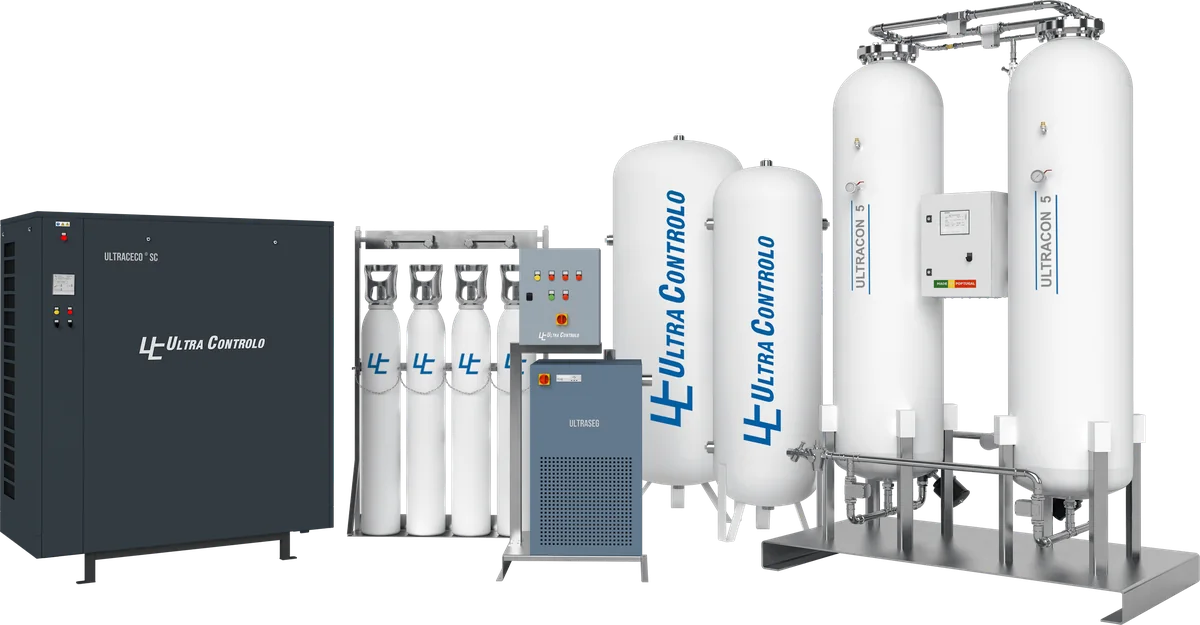
Ultra Controlo is a Portuguese company that designs and manufactures medical gas systems for hospitals.
ULTRAOX plants deliver 93% ± 3% oxygen.
This page does not say whether any plant meets Colombian requirements. That is for the contracting authority and the health authorities to confirm.
- PSA oxygen range
- ULTRAOX SC, ULTRAOX ST and ULTRAOX CO plants, with ULTRACON oxygen generators
- Oxygen grade
- Oxygen 93, 93% ± 3%
- Medical device
- CE 1639, Class IIb, the whole plant as one medical device
- Built to
- EN ISO 7396-1
- Quality system
- ISO 13485:2016, ISO 9001:2015 and ISO 14001
Does Resolution 4410 of 2009 cover oxygen made on site with PSA?
Yes. It has a chapter on on-site production of medicinal oxygen by the molecular sieve process, starting at Article 75. The chapter sets requirements for the technical director, the primary and reserve supply, the monitoring, the alarms and the room.
Does a hospital that makes its own oxygen need a pharmacist?
Article 75 says the generating plants must have a responsible technical director who is a professional pharmaceutical chemist. Article 78 adds that, when the oxygen is made in a health care provider institution (IPS), the technical direction can be held by the pharmaceutical chemist in charge of the institution’s pharmacy service.
How large must the reserve supply be?
Article 75 says the reserve storage must correspond to at least 48 hours of average demand, and that the reserve must start automatically if the primary supply fails. The reserve is made up of pressure vessels such as cylinders, thermos or cryogenic tanks.
Who inspects a medical gas plant in Colombia?
Article 81 gives inspection, surveillance and control to INVIMA, the national institute for the surveillance of medicines and food, and to the territorial health entities within their competences. Article 85 says establishments that start manufacturing medical gases obtain GMP certification from INVIMA.
Where do Colombian public hospitals publish their purchases?
On SECOP II, which Colombia Compra Eficiente describes as a transactional platform for managing all contracting processes online, with accounts for entities and for suppliers, and a public view for any interested third party.
What documents does Ultra Controlo provide for a tender?
ULTRAOX oxygen plants carry CE marking as Class IIb medical devices through notified body 1639 (SGS), with the whole plant certified as a single medical device, and are built to EN ISO 7396-1. For tenders, Ultra Controlo provides its certificates, CE declarations of conformity and technical dossiers.
Who services an ULTRAOX plant after handover?
UltraCare is Ultra Controlo’s technical assistance programme for its medical gas systems, available 24 hours a day, 365 days a year. It covers preventive maintenance and monitoring, corrective service, original spare parts and rental equipment while a unit is serviced.
ULTRAOX is designed for a minimum life cycle of 150,000 hours, which Ultra Controlo presents as an investment for at least 20 years.
Ready to discuss oxygen for your hospital?
Tell us about your site. Our engineering team sizes the configuration and sends a quote.