Oman’s Health Vision 2050 and medical gases.
In May 2014 Oman’s Ministry of Health published the first edition of Health Vision 2050, which expected 113 Ministry of Health hospitals with 14,559 beds by 2050. This guide sets out what the document proposed, what public sources say is being built and what to plan in the medical gases of a new hospital.
113 hospitals and 14,559 beds by 2050.
Health Vision 2050: The Main Document was prepared by the Ministry of Health’s Undersecretariat for Planning Affairs and first published in May 2014. Its figures are projections made in 2014, not a record of what has been built.
The document expected Ministry of Health hospitals to rise from 49 in 2012 to 113 in 2050, an additional 64 hospitals, and hospital beds from 4,659 to 14,559, or 30.8 beds per 10,000 population against 12.9 in 2012. Its projection assumed an average of 30 hospital beds per 10,000 population.
For tertiary care it proposed three medical cities: in the capital area by 2020, in North Al Batinah by 2035 and in Al Wusta by 2045. Its analysis suggested building 2,000 tertiary beds for different specialties, on the same campus, as in a medical city.
Public hospitals were to be redefined into three types of general hospital: 300-bed (and more) hospitals for more than 100 thousand people, 150-bed hospitals for 50 to 100 thousand and 50-bed hospitals for 50 thousand. Existing regional and wilayat hospitals were to be replaced gradually with new buildings, and local hospitals demolished over the years.
- Ministry hospitals in 2012
- 49
- Expected in 2050
- 113
- Hospital beds in 2012
- 4,659
- Expected beds in 2050
- 14,559
- Beds per 10,000 population
- 12.9 in 2012, 30.8 expected in 2050
- Hospital types
- 300-bed (and more), 150-bed and 50-bed
- Medical cities proposed
- Capital area, North Al Batinah and Al Wusta
Figures as the 2014 document states them, read on 25 November 2026 in the copy hosted by FAOLEX. This page does not say how far the plan has been carried out or whether a later edition changed it.
New and replacement hospitals by type.
Table 42 of the 2014 document spread the Ministry of Health hospitals over eight health plan periods, from 2012 to 2050. These are its totals for the whole period. For the 2026 to 2030 health plan period, the table listed six new 150-bed hospitals and expected 8,609 beds at its end.
| Hospital type | New hospitals | Built to replace old hospitals |
|---|---|---|
| 50-bed | 12 | 29 |
| 150-bed | 42 | 5 |
| 300-bed (and more) | 10 | 14 |
What the 2014 document asked of each hospital.
The document gives these as a summary and says the detailed components of each hospital type are in a strategic study for health services.
Built in 50-bed blocks
Hospitals were to be multi-storey buildings of two, three, four or more floors, built in 50-bed blocks and expandable for a growing population.
At least 20% critical care
Beds in intensive care, coronary care and special care baby units were to be at least 20% of a hospital’s total beds.
Isolation for at least 10%
All hospitals were to have isolation rooms and special rooms to accommodate at least 10% of the beds.
Dialysis, day care and rehabilitation
Every hospital was to include day care, rehabilitation services and a renal dialysis unit of 20, 30 beds or more.
The hospitals Oman is opening and building.
Ministry of Health news pages and the Oman Observer report new public hospitals, all read on 25 November 2026. None of them refers to Health Vision 2050, so this page does not link any project to the 2014 document.
In February 2026 the Oman Observer put the Ministry of Health’s 2026 budget at approximately RO 1 billion and listed the Al Namaa, Samail and Mahout hospitals among more than 15 projects under construction during 2026 and 2027. The paper called the new Sultan Qaboos Hospital in Salalah one of the largest health projects in Oman, with 700 beds over seven floors. On 19 August 2026 the paper reported a visit by the Minister of Health, with work advancing towards completion and medical equipment already installed.
The Ministry of Health opened Mahout Hospital, in Al Wusta, on 29 April 2026, with 54 inpatient beds.
The Al Falah Hospital announcement lists a fully integrated medical gas building, alongside a water treatment plant and backup generators.
- Salalah
- New Sultan Qaboos Hospital, 700 beds, under construction in August 2026
- Al Falah
- 170 beds, foundation stone laid on 2 December 2024
- Samail
- 170 beds, foundation stone laid on 12 June 2024
- Seeb
- Seeb Tertiary Hospital, 750 beds, reported as planned in December 2024
- Opened in January 2026
- Al Suwaiq Hospital (260 beds) and Khasab Hospital
- Opened in April 2026
- Mahout Hospital (54 inpatient beds)
None of the sources read names the medical gas or oxygen supplier of these hospitals, or says whether they will use PSA plants. Costs are left out, because the sources give different figures for the largest project. This guide does not cover the registration of medical devices in Oman.
What to plan in the medical gases.
The 2014 document refers to medical gases only in its chapter on medical products and technologies, in a passage about storage at the Nizwa regional warehouse, and does not discuss on-site oxygen production. These are the parts of a hospital’s medical gas system, each with its own guide.
Medical oxygen systems
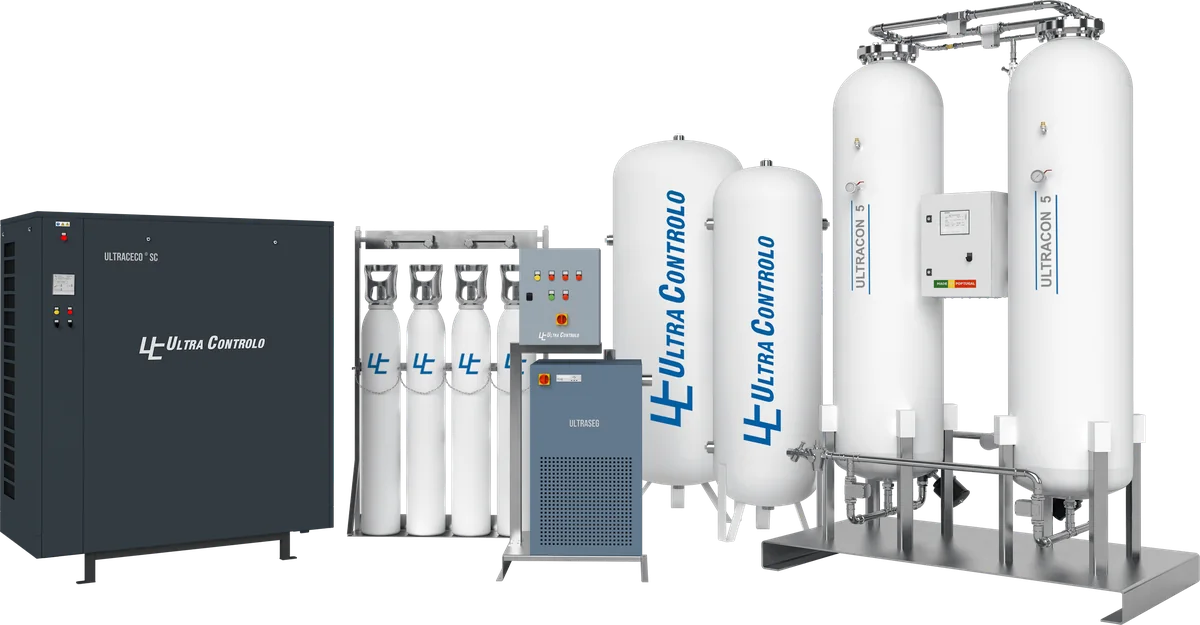
Pressure swing adsorption, PSA, makes Oxygen 93, the medical oxygen grade with its own monographs in the European and US pharmacopoeias. ULTRAOX runs it automatically and measures purity continuously.
Medical gas pipeline systems
A medical gas pipeline system (MGPS) is the network that carries medical gases and vacuum from the central supply to every point of use in a hospital.
Medical air for hospitals
Medical air is compressed air supplied through the hospital pipeline, breathed by patients and used to drive medical equipment, and the European Pharmacopoeia treats it as a medicine.
Medical vacuum for hospitals
A medical vacuum system is the central plant and pipeline that provide continuous suction for clinical use across the hospital.
Estimate the demand
To size an oxygen plant for a hospital, estimate the oxygen demand first: WHO (2023) calculates it from the beds per type of ward, the wall outlets per bed or historical consumption. Then match that flow, in Nm³/h, to a plant size.
Plants are modular: one or more generators and compressors are combined to match the hospital’s demand, and capacity can be added later without replacing what is already installed.
Heat, humidity, dust, altitude and the power supply all change what a PSA plant needs, so give the manufacturer the real site conditions.
This page does not estimate the oxygen demand or the number of plants for the hospitals in the 2014 document. The method is in the hospital oxygen plant sizing guide.
What did Oman’s Health Vision 2050 plan for hospitals?
The 2014 document expected Ministry of Health hospitals to reach 113, with 14,559 beds, by 2050, against 49 hospitals and 4,659 beds in 2012. It proposed three medical cities for tertiary care and three types of general hospital, of 300, 150 and 50 beds.
How many new hospitals did Table 42 list?
Over the whole period to 2050, Table 42 listed 64 new hospitals: 42 of 150 beds, 12 of 50 beds and 10 of 300 beds. It also listed old hospitals to be replaced: 29 with 50-bed hospitals, 5 with 150-bed hospitals and 14 with 300-bed hospitals.
How many critical care beds did the 2014 document recommend?
It said beds in critical care units, meaning intensive care, coronary care and special care baby units, should be at least 20% of a hospital’s total beds, and that isolation rooms and special rooms should accommodate at least 10% of the beds.
Did Health Vision 2050 say how hospitals would get their oxygen?
No. The 2014 document does not discuss on-site oxygen production. It refers to medical gases only in its chapter on medical products and technologies, in a passage about storage at the Nizwa regional warehouse.
How many beds does a PSA oxygen plant supply?
It depends on the type of ward and the usage factors applied, because WHO (2023) sizes a plant on estimated oxygen demand, calculated from the beds per type of ward, the wall outlets per bed or historical consumption.
Does Ultra Controlo have projects in Oman?
No news story on this site reports an Ultra Controlo project in Oman. This page is a buying guide, built from public sources.
Ready to discuss oxygen for your hospital?
Tell us about your site. Our engineering team sizes the configuration and sends a quote.