Buying a PSA oxygen plant in Zambia.
Zambia’s Ministry of Health counted ten PSA plants in public facilities in its 2022 to 2026 oxygen plan and planned ten duplex PSA systems for provincial hubs. In April 2026 UNOPS reported the sixth and final plant of a Global Fund funded programme, a PSA plant at St. Paul’s Mission Hospital. This guide sets out those public facts and what to check before you buy.
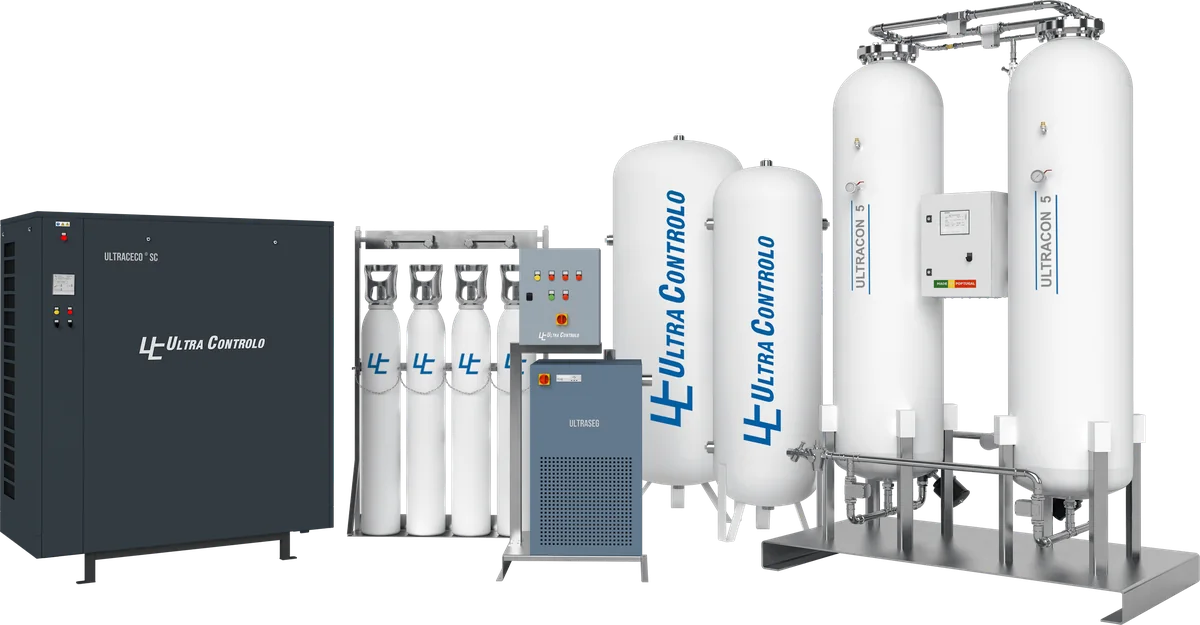
What Zambia’s 2022 plan says about PSA plants.
Zambia’s Ministry of Health says the country has ten existing PSA plants in public facilities, but only nine are functional. They are located in five provinces, with half of them in Lusaka.
The National Medical Oxygen Strategic Plan 2022 to 2026 says the PSA plants at Lewanika General Hospital and Mansa General Hospital are functioning, but suboptimally, and a footnote gives the reason: frequent breakdowns and lack of adequate service and maintenance. The plan says public facilities’ capacity to produce medical oxygen is inadequate because of the small number and low production capacity of PSA plants, and because plants and associated infrastructure, such as manifolds and oxygen reticulation, are insufficiently maintained.
For PSA plants, the plan’s SWOT table lists limited technical know-how to service and maintain plants as a weakness, and framework contracts for maintenance as an opportunity. As threats it lists poor oxygen purity recordings when service and maintenance parts are constrained, and plants too small to produce the desired quantities of oxygen.
- National plan
- Zambia National Medical Oxygen Strategic Plan 2022 to 2026, Ministry of Health, 2022
- Public PSA plants
- Ten in 2022, nine of them functional, in five provinces and half in Lusaka
- Plant sizes
- 10 m³/hour to 120 m³/hour, where the plan’s table of public PSA plants gives a capacity
- Planned PSA systems
- 10 duplex PSA systems with filling capacity for provincial hubs (activity 1.1.3)
- Biomedical staff
- 44 for over 3,003 health facilities countrywide, the plan says
- Donor plant, 2026
- A PSA plant at St. Paul’s Mission Hospital, Luapula Province, the sixth and final of a Global Fund funded programme (UNOPS, 28 April 2026)
- Grid
- 4% of Zambians enjoy a reliable supply from the national grid (Afrobarometer, July 2024 survey), and 89.6% of firms experienced electrical outages in 2025 (World Bank)
The plan describes 2022 and may be out of date. Its sections do not agree on how many plants have cylinder filling or on the make-up of the 44 biomedical staff, so this guide gives neither. This guide does not cover the registration of medical devices in Zambia.
What UNOPS reported at St. Paul’s.
From a UNOPS press release of 28 April 2026, read on 21 November 2026. It is the implementing agency’s own account, and the output figure is the one the release gives.
The last of six plants
Zambia’s Minister of Health commissioned the sixth and final oxygen production plant of a programme implemented by UNOPS, with funding from the Global Fund and support from the Ministry of Health. The release says the six plants are now operational across Luapula, Central, Muchinga, Northern and Eastern provinces.
A PSA plant for a district
The plant at St. Paul’s Mission Hospital uses Pressure Swing Adsorption technology and, the release says, has a minimum production capability of 6,000 litres of oxygen per day, for continuous operation under optimal conditions. It is meant to supply Nchelenge District and its neighbouring health centres.
Pipelines, genset and transport
Beyond the PSA plant, the release lists oxygen distribution pipelines, manifolds to key clinical areas, a dedicated standby genset and a vehicle for cylinder logistics. UNOPS managed site preparation on about 2,000 square metres, with a perimeter wall, a controlled-access gate and an independent fire detection and fighting system.
After commissioning
A Global Fund representative said at the commissioning that responsibility now shifts from infrastructure delivery to performance, reporting and sustainability. The release gives no cost, supplier, maintenance contract or training plan, and does not give the size or technology of the other five plants.
What the plan set out to do.
Read on 21 November 2026 in the Ministry of Health’s plan. Each line is an intended activity from 2022, not a record of what was later bought or built.
| Point | What the plan says |
|---|---|
| Supply systems | Strategic objective 1 is to strengthen medical oxygen supply systems in 60% of public hospitals in Zambia. |
| Feasibility studies | Activity 1.1.1 is to conduct feasibility studies on oxygen production and filling capacity in all 10 provinces, including the sizing and filling capacity of the proposed PSA installation sites in provincial hubs. |
| New PSA systems | Activity 1.1.3 is to procure and install 10 duplex PSA systems with filling capacity for provincial hubs. |
| Manifolds and piping | Activity 1.2.1 is to procure and install oxygen manifolds and reticulation for all level 1, 2 and 3 hospitals. |
| Service contracts | Intervention 1.4 is to strengthen service contracts management for existing PSA plant installations, and activity 1.4.3 is to conduct three after-service inspections a year in each hospital where PSA plants exist. |
| Staff | Strategic objective 4 is to increase the number of staff involved in oxygen management from 44 to 3,614, and activity 4.2.1 is to train 10 biomedical staff members, through programmes abroad, on the maintenance and servicing of oxygen plants. |
How suppliers reach Zambian public buyers.
The Zambia Public Procurement Authority (ZPPA) runs the e-GP system at eprocure.zppa.org.zm, which describes itself as a web-based system for the full lifecycle of a tendering process, for both buyers and suppliers. A supplier registration guide on the ZPPA website says suppliers self-register with a company registration number and a Tax Payer’s Identification Number (TPIN), and that foreign suppliers not registered with the relevant authorities in Zambia can continue the registration manually. The System Administrator validates an account only after the registration fee is paid; the guide gives no amount.
The 2022 plan gives the Ministry of Health the role of creating framework contracts for the procurement of oxygen, equipment and oxygen accessories, and for the maintenance of oxygen plants. This guide does not report any oxygen notice from the e-GP system.
A donor call has also appeared on the UN Global Marketplace (UNGM). On 20 December 2021 UNICEF published a request for proposals, LRFP 9171914, for the service maintenance of the PSA medical oxygen plants at Chinsali General Hospital, Kalindawalo General Hospital and the National Heart Hospital, whose plants the 2022 plan lists at 30, 30 and 10 m³/hour. UNICEF strongly advised bidders to visit the three plants and assess them to inform their financial proposal, and attached terms of reference and a proposed list of spare parts. The call was a re-advertisement, and its deadline, 27 December 2021, has passed.
Three checks before you request a quote.
Short and specific to a purchase in Zambia. The general method is in the guides linked below.
Know who is buying
A purchase may come from the Ministry of Health, which the plan tasks with creating framework contracts, or from a donor programme run by an agency such as UNOPS or UNICEF. Ask who the buyer is, and if it tenders on the e-GP system, check that your company is registered and validated there.
Agree service before delivery
The plan links its two underperforming PSA plants to frequent breakdowns and a lack of service and maintenance, and plans three after-service inspections a year where PSA plants exist. Ask for the service plan in the offer: who maintains the plant, how spare parts reach the site and which hospital staff are trained to run it.
Plan for load shedding
Afrobarometer’s May 2026 dispatch says hydropower accounts for 84% of Zambia’s electricity supply and, citing a 2024 source, that ZESCO has implemented load shedding for up to 21 hours per day. The St. Paul’s plant came with a dedicated standby genset. Tell us what supply the hospital has, the size of its standby generator and how far the plant room is from the wards.
What did Zambia’s 2022 oxygen plan say about PSA plants?
The Ministry of Health’s National Medical Oxygen Strategic Plan 2022 to 2026 says the country has ten existing PSA plants in public facilities, but only nine are functional, located in five provinces with half of them in Lusaka. Among its activities, it plans feasibility studies in all 10 provinces and the procurement and installation of 10 duplex PSA systems with filling capacity for provincial hubs.
The plan is from 2022, and its activity list is not a record of purchases.
What did UNOPS report about the St. Paul’s Mission Hospital oxygen plant?
A UNOPS press release of 28 April 2026 says Zambia’s Minister of Health commissioned the sixth and final oxygen production plant of a Global Fund funded programme, at St. Paul’s Mission Hospital in Luapula Province. The release says the plant uses PSA technology with a minimum production capability of 6,000 litres of oxygen per day, and lists distribution pipelines, manifolds, a standby genset and a vehicle for cylinder logistics.
How many biomedical staff did Zambia’s oxygen plan count?
The 2022 plan counts 44 biomedical staff for a total of over 3,003 health facilities countrywide, and says that, due to the lack of available biomedical engineers and technologists, health facilities can expect equipment that is rarely serviced. Strategic objective 4 is to increase the number of staff involved in oxygen management from 44 to 3,614.
How does a foreign supplier register on Zambia’s e-GP system?
A ZPPA supplier registration guide says all suppliers can self-register by selecting “Register as Supplier” on the e-GP main page. When the organisation is not found on the OSSIS system, which the guide expects for foreign suppliers not registered with the relevant authorities in Zambia, the registration continues manually, with documents added in a ZIP archive.
The System Administrator validates the registration only after the supplier pays the registration fee. The guide gives no fee amount.
Does Ultra Controlo have projects in Zambia?
No news story on this site reports an Ultra Controlo project in Zambia. This page is a buying guide, built from public sources.
Who services an ULTRAOX plant after handover?
UltraCare is Ultra Controlo’s technical assistance programme for its medical gas systems, available 24 hours a day, 365 days a year. It covers preventive maintenance and monitoring, corrective service, original spare parts and rental equipment while a unit is serviced.
ULTRAOX is designed for a minimum life cycle of 150,000 hours, which Ultra Controlo presents as an investment for at least 20 years.
Learn more
How to choose a PSA oxygen generator
PSA oxygen plant maintenance
PSA oxygen cylinder filling plant
View ULTRAOX
- What did Zambia’s 2022 oxygen plan say about its PSA plants?
- What did UNOPS say Zambia’s sixth PSA oxygen plant includes?
- How is a donor-funded oxygen plant handed over to the ministry?
- How do suppliers register on Zambia’s e-GP system?
- How reliable is grid electricity in Zambia?
- What should a national oxygen plant maintenance contract cover?
Ready to discuss oxygen for your hospital?
Tell us about your site. Our engineering team sizes the configuration and sends a quote.