Buying a PSA oxygen plant in Mexico.
A hospital buying a PSA oxygen plant in Mexico should know what the Mexican Pharmacopoeia (FEUM) has put out for consultation on on-site PSA plants, and what NOM-016-SSA3-2012 says about the gas room. This guide sets out five points from those two public documents, as read on 19 November 2026. The FEUM text is a draft, not a rule in force.
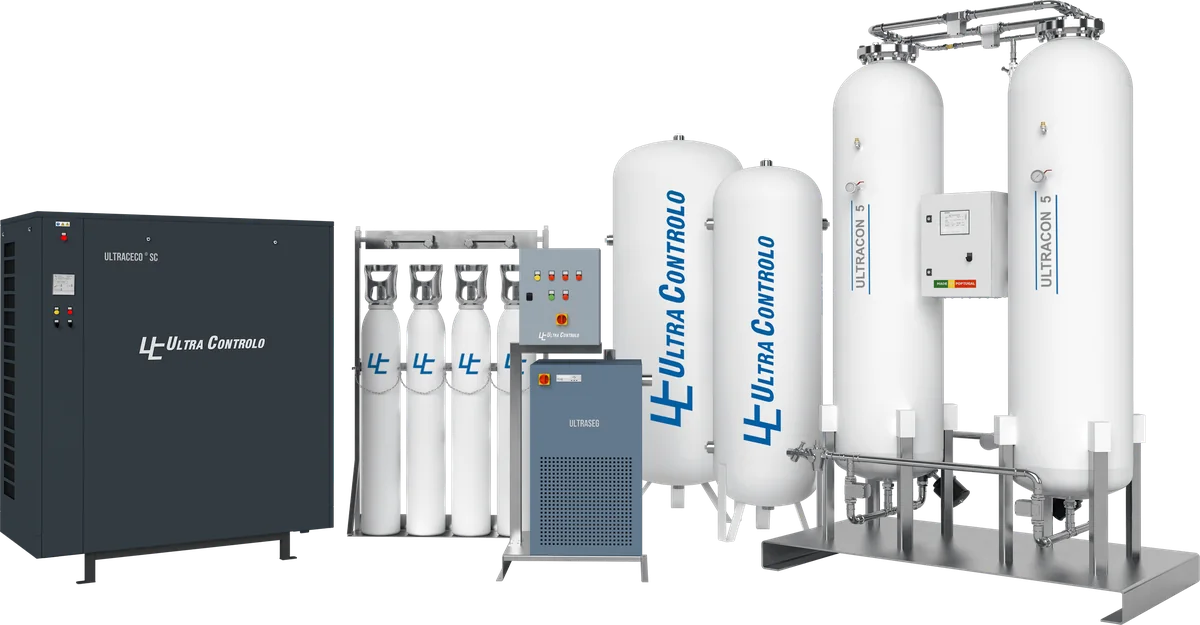
Five points before you buy.
Each point comes from the FEUM consultation draft 2026-3 or from NOM-016-SSA3-2012, both opened and read on 19 November 2026. This page is a summary, not legal advice.
| Point | What the document says |
|---|---|
| 1. A draft, not a rule | The FEUM appendix on PSA and VPSA plants was open for comments from 1 August to 30 September 2026. |
| 2. Oxygen 93 | Oxygen 93% ± 3%, Grade FEUM, is made on site by devices and is kept apart from oxygen 99.5%. |
| 3. Device and quality system | A PSA or VPSA plant is a class 2 medical device, with a quality system, DQ, IQ, OQ and PQ and a registration. |
| 4. The purchase specification | Operating range, alarms, outlet pressure, spare parts, documents in Spanish and a 10-year service life. |
| 5. The gas room | NOM-016-SSA3-2012 asks hospitals with fixed oxygen to have an exclusive gas room outside the main building. |
A draft, not a rule.
The FEUM text on PSA plants is an informative appendix put out for consultation, so it is not a requirement in force.
The Farmacopea de los Estados Unidos Mexicanos (FEUM) published it as Consulta a usuarios de la FEUM 2026-3, Gases medicinales. It is an informative appendix with technical specifications for on-site oxygen plants by PSA and VPSA for hospital use.
Under numeral 6.3.3.1 of NOM-001-SSA1-2020, interested parties could send comments to the pharmacopoeia commission (CPFEUM) from 1 August to 30 September 2026. This page does not confirm that a final version has been published, so check the current text with the FEUM before you write a tender around it.
- Title
- Gases medicinales, 32 pages
- Comment window
- 1 August to 30 September 2026
- Status
- Draft appendix, informative
- Read on
- 19 November 2026
Oxygen 93 on site.
The draft treats oxygen 93% ± 3%, Grade FEUM, as a product made on site, and keeps it apart from oxygen 99.5%.
It says oxygen 93% ± 3% Grade FEUM has no medicine registration because it is made on site in health establishments by medical devices, the oxygen concentrators (PSA, VSA, VPSA). It adds that operating such a plant requires COFEPRIS authorisation. Oxygen 99.5% Grade FEUM, by contrast, is a medicine that needs a sanitary registration and compliance with NOM-059-SSA1.
The draft describes PSA oxygen in the FEUM, the European Pharmacopoeia and the US Pharmacopeia as between 90.0% and 96.0% oxygen by volume, the rest mainly argon and nitrogen. It also says oxygen 93% and oxygen 99.5% must not share distribution circuits, meaning pipes, manifolds or outlets, and that oxygen 93 is labelled as such.
The hospital is responsible for showing that the gas meets the FEUM monograph, and the pharmacist in charge of the production unit follows the 93% oxygen on the plant’s continuous analysers.
- Grade
- 93% ± 3%, Grade FEUM
- Range
- 90.0% to 96.0% by volume
- Registration as a medicine
- None, because it is made on site
- Shared circuits with 99.5%
- Not allowed
The plant is a medical device.
The draft considers a PSA or VPSA plant a class 2 medical device and asks for a quality system and a registration.
It says the oxygen concentrators and the elements that make up a medical oxygen system are predominantly medical devices that require a sanitary registration and compliance with the current NOM-241-SSA1, besides pressure equipment and accessories.
The manufacturer or concessionaire of the PSA system must run a complete quality system: process validation, equipment qualification (design, installation, operation and performance, DQ, IQ, OQ and PQ), process controls, deviation management and CAPA. The device must be registered with the health authority, and the documents asked for include the COFEPRIS registration and the four qualifications by a certified verification unit.
The risk-classification line lists Class II for Mexico, Class C under GHTF rule 11, Class II for the US FDA, Class IIA for the EU and Australia, and Class II for Canada. It names NOM-241-SSA1-2025 and NMX-CC-9001-IMNC for the manufacturer’s quality system, and a free-sale certificate from Australia, Canada, Japan, the US or the European Community.
- Class
- Class 2 medical device; Class II (Mexico)
- Qualification
- DQ, IQ, OQ and PQ
- Registration
- COFEPRIS registration of the device
- Manufacturer’s quality system
- NOM-241-SSA1-2025 and NMX-CC-9001-IMNC
What the draft asks of the plant.
The purchase specification in the draft covers operating conditions, alarms, outlet pressure, power, spare parts and service life.
The plant must supply the specified oxygen concentration continuously at an ambient temperature of 10 to 40 °C, relative humidity of 15 to 95% and an altitude of 0 to 2,700 m above sea level. It asks for a low-oxygen alarm set at 91%, an outlet pressure of 300 to 600 kPa (3 to 6 bar) with an alarm below 300 kPa, and a backup supply so the oxygen is available 99.9% of the time. The control interface and the documents are in Spanish.
The draft asks for a minimum service life of 10 years, guaranteed by the manufacturer’s letter and a bond for the value of the PSA system. It also asks for a spare-parts kit for 3 years of preventive maintenance, replacement sieve beds with no more than a year of storage since packing, and a contract that sets preventive and corrective maintenance costs for at least 3 years from installation.
It also names ISO 7396-1 and NFPA 99, among other standards, for piping and for the installation.
- Ambient temperature
- 10 to 40 °C
- Relative humidity
- 15 to 95%
- Altitude
- 0 to 2,700 m
- Low-oxygen alarm
- 91%
- Outlet pressure
- 300 to 600 kPa
- Service life
- 10 years minimum
The gas room under NOM-016.
NOM-016-SSA3-2012 sets the minimum infrastructure and equipment of hospitals, including the gas room for fixed oxygen supply.
The standard was published in the Diario Oficial de la Federación on 8 January 2013. Numeral 6.3 says establishments with fixed installations for oxygen and nitrous oxide must have an exclusive gas room for safe, uninterrupted supply to the care areas.
The gas room is installed outside the main building, away from heat and electrical energy and where containers can be loaded and unloaded safely. It is roofed, ventilated, has a concrete floor and a perimeter limit, carries hazard and no-smoking signs, is a restricted-access area, and has at least one manifold exclusive to oxygen.
The text describes the gas room in terms of containers and manifolds. It does not mention PSA plants, so ask your health authority how it applies to a plant that makes oxygen on site.
- Subject
- Minimum infrastructure and equipment of hospitals and specialised outpatient clinics
- Gas room
- Numeral 6.3, outside the main building
- Oxygen manifold
- At least one, exclusive to oxygen
- Read on
- 19 November 2026
Four things to put in writing.
They follow from the five points above and apply to every supplier you compare.
The status of the text.
Ask which version of the FEUM appendix your tender relies on, and confirm with the FEUM and your health authority whether it has been finalised.
The registration and the qualifications.
Ask for the sanitary registration of the device, the manufacturer’s quality-system certificates and the plan for DQ, IQ, OQ and PQ at your site.
The site conditions.
Set your site against the operating range in the draft, from 10 to 40 °C and 0 to 2,700 m, and ask for the plant’s guaranteed oxygen purity and alarm settings in writing.
The service life and the spares.
Ask who guarantees the service life and the supply of spare parts, and for how long. This guide does not replace the tender notice or the advice of your health authority.
How ULTRAOX specifies purity.
Ultra Controlo is a Portuguese company that designs and manufactures medical gas systems for hospitals.
ULTRAOX plants deliver 93% ± 3% oxygen.
This page does not say whether any plant meets Mexican requirements or the FEUM draft. That is for COFEPRIS and your health authority to confirm.
- PSA oxygen range
- ULTRAOX SC, ULTRAOX ST and ULTRAOX CO plants, with ULTRACON oxygen generators
- Oxygen grade
- Oxygen 93, 93% ± 3%
- Medical device
- CE 1639, Class IIb, the whole plant as one medical device
- Built to
- EN ISO 7396-1
- Quality system
- ISO 13485:2016, ISO 9001:2015 and ISO 14001
Questions from buyers in Mexico.
Answers from the two documents above. More on the medical gas answers page.
Is the FEUM appendix on PSA oxygen plants in force?
The FEUM published the appendix as Consulta a usuarios de la FEUM 2026-3, Gases medicinales, with comments invited from 1 August to 30 September 2026. It is described as an informative appendix, so it is a draft.
This guide does not confirm that a final version has been published. Check the current text with the FEUM before you rely on it.
What oxygen purity does the FEUM draft describe for PSA plants?
The draft describes oxygen 93% ± 3% Grade FEUM, with PSA oxygen between 90.0% and 96.0% oxygen by volume and a nominal value of 93.0%. It says this oxygen has no medicine registration because it is made on site by medical devices, and that its operation requires COFEPRIS authorisation.
Is a PSA plant a medical device in Mexico?
The FEUM draft considers a PSA or VPSA plant a class 2 medical device, lists Class II for Mexico in its risk classification, and asks for the device’s sanitary registration from COFEPRIS and a complete quality system with DQ, IQ, OQ and PQ qualification.
The draft is not a rule in force, so ask COFEPRIS what applies to your plant.
What operating conditions does the FEUM draft ask a PSA plant to meet?
The draft asks the plant to supply the specified oxygen concentration continuously at an ambient temperature of 10 to 40 °C, relative humidity of 15 to 95% and an altitude of 0 to 2,700 m above sea level. It also asks for a low-oxygen alarm at 91% and an outlet pressure of 300 to 600 kPa.
What does NOM-016-SSA3-2012 say about the gas room of a hospital?
Numeral 6.3 says establishments with fixed installations for oxygen and nitrous oxide must have an exclusive gas room outside the main building. It must be roofed, ventilated and identified, with restricted access and at least one manifold exclusive to oxygen.
The text describes containers and manifolds and does not mention PSA plants, so ask your health authority how it applies to a plant.
Ready to discuss oxygen for your hospital?
Tell us about your site. Our engineering team sizes the configuration and sends a quote.