Buying a PSA oxygen plant in Brazil.
A hospital buying a PSA oxygen plant in Brazil should know what Anvisa, the national health regulator, has written about PSA oxygen purity and about medicinal gas notification, and where tenders are published. This guide sets out five points from those documents, as read on 19 November 2026.
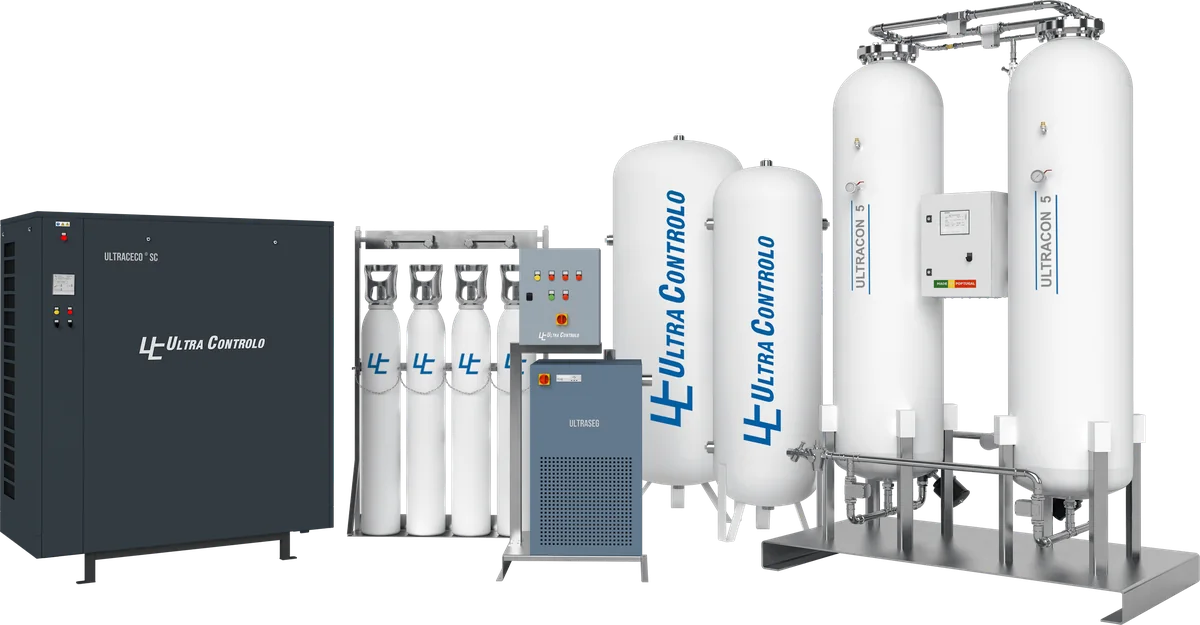
Five points before you buy.
Each point comes from a public document of Anvisa or of the federal procurement portal, opened and read on 19 November 2026. This page is a summary, not legal advice.
| Point | What the document says |
|---|---|
| 1. Where PSA fits | Distributed oxygen comes from cryogenic liquefaction at 99.0% or more; PSA in health establishments, for their own use, has been common since 1970. |
| 2. What PSA delivers | PSA oxygen is traditionally 93.0%; equipment gives 90.0% to 93.0%, and ABNT NBR ISO 13587 sets a floor of 90.0% for concentrator systems. |
| 3. The 2021 exception | A 95.0% minimum, temporary and tied to the Covid-19 emergency, for manufacturers authorised by Anvisa. |
| 4. RDC 870/2024 | Notification of medicinal gases classified as medicines; it defines PSA and sets out a scope for oxygen concentrator systems. |
| 5. Tenders | The PNCP is the official site for the acts required by Law 14.133 of 2021. |
Where PSA oxygen fits.
Anvisa’s Technical Note 20/2021 separates oxygen supplied by gas companies from oxygen that a hospital makes for its own use.
The note says that medicinal oxygen for distribution and sale is obtained by cryogenic liquefaction, at a minimum purity of 99.0% by volume, following the oxygen monograph of the Brazilian Pharmacopoeia, 6th edition, published in August 2019.
It then records that obtaining oxygen with PSA units in health establishments, for their own use, has been common since 1970. It gives four reasons: the differences between the regions of Brazil, the size of the country, the transport and logistics difficulties imposed by its infrastructure, and the way the medicinal gas business works.
- Issued by
- Anvisa’s general management of sanitary inspection (GGFIS)
- Signed
- 25 January 2021
- Subject
- Oxygen at a minimum of 95.0% during Covid-19, under RDC 461/2021
- Read on
- 19 November 2026
What a PSA plant delivers.
Anvisa’s note describes PSA oxygen as traditionally 93.0%, with a floor of 90.0% for concentrator systems.
A PSA unit uses molecular sieves to filter atmospheric air and produce oxygen traditionally called 93.0%. Depending on system performance, including maintenance, and on the speed of the process, equipment on the market delivers between 90.0% and 93.0%. As a rule, the faster the process, the lower the purity.
The note cites ABNT NBR ISO 13587 (3rd edition, 26 October 2017), on oxygen concentrator systems for centralised medical oxygen systems, which requires at least 90.0%. It also notes that the US and European pharmacopoeias provide for oxygen 93% for medical use, with an acceptable range of 90.0% to 96.0%, produced by PSA.
- Oxygen by cryogenic liquefaction
- 99.0% minimum
- PSA oxygen, as traditionally called
- 93.0%
- Equipment on the market
- 90.0% to 93.0%
- Concentrator system, ABNT NBR ISO 13587
- 90.0% minimum
- Oxygen 93 in the US and European pharmacopoeias
- 90.0% to 96.0% accepted
The 95% exception of 2021.
The 95% minimum of RDC 461/2021 was a temporary measure for the Covid-19 emergency.
On 22 January 2021, RDC 461 amended RDC 392 of 26 May 2020 to allow, as an exception, medicinal oxygen at a minimum of 95.0%. The note was written after the oxygen shortage in Manaus, and it applies the exception to manufacturers authorised by Anvisa and to their establishments licensed by the local sanitary bodies.
Anvisa presents it as exceptional: to be used only where demand rises sharply and production under the 99.0% requirement is limited, and for a limited time. The note also warns that supplying oxygen of a purity other than 99.0% without the knowledge of health professionals risks medication errors, so the purity of the gas supplied has to be communicated. Buyers should treat the exception as background and confirm the current requirement with Anvisa.
- Date
- 22 January 2021
- Minimum purity
- 95.0%
- Applies to
- Manufacturers authorised by Anvisa, and their licensed establishments
- Duration
- Limited, tied to the emergency
RDC 870/2024 and PSA.
RDC 870 of 17 May 2024 is Anvisa’s rule on the notification, registration and post-registration changes of medicinal gases classified as medicines.
It applies to industrialised medicinal gases, for use in health services or in homes. In the English version that Anvisa publishes, its sole paragraph says the resolution does not apply to medicinal gases produced by oxygen concentrator systems in health services or in homes for personal use.
RDC 870 defines an oxygen concentrator system, also known as an oxygen concentrator plant or Pressure Swing Adsorption (PSA), as a system of equipment and accessories that filters, retains moisture and concentrates oxygen from atmospheric air by molecular adsorption. Read the Portuguese original and ask Anvisa how it applies to your plant before you rely on this summary.
- Date
- 17 May 2024
- Scope
- Industrialised medicinal gases classified as medicines
- PSA
- Defined as an oxygen concentrator system
- Version read
- English version published by Anvisa, 23 pages
Where tenders are published.
The PNCP is the official website for the acts required by Brazil’s Law 14.133 of 2021.
The federal procurement portal, Compras.gov.br, describes the Portal Nacional de Contratações Públicas (PNCP) as the official website for the centralised and mandatory disclosure of the acts required by Law 14.133 of 2021, the new tendering law.
A supplier who wants to follow public tenders under that law can therefore start at the PNCP, and read each notice for what it asks of the plant and of the supplier.
- Role
- Official website for the centralised, mandatory disclosure of acts under Law 14.133/2021
- Described by
- Compras.gov.br, the federal procurement portal
- Read on
- 19 November 2026
Four things to put in writing.
They follow from the five points above and apply to every supplier you compare.
The purity, in writing.
Ask for the purity the plant is guaranteed to deliver and how it is monitored, and set it beside the figures Anvisa cites: 90.0% in ABNT NBR ISO 13587 and the 90.0% to 96.0% range of the pharmacopoeias. Anvisa’s Technical Note 155/2021, on oxygen concentrator plants in health establishments, also records that RDC 50/2002 describes plants that obtain medicinal oxygen at a minimum of 92%, with a reserve supply that starts when the plant runs below 92%. Ask your sanitary authority which figure applies to your project.
The certificates of the whole plant.
Ask for the certificates, declarations of conformity and technical dossiers of the complete plant, and ask your sanitary authority which of them it wants to see.
Who tells the clinical team.
Agree how the purity of the oxygen is communicated to the staff who use it, because Anvisa’s note warns about medication errors when the purity is not the one people expect.
The notice that applies.
Read the tender notice for what it asks of the plant and the supplier. This guide does not replace it, or the advice of Anvisa and your local sanitary authority.
How ULTRAOX specifies purity.
Ultra Controlo is a Portuguese company that designs and manufactures medical gas systems for hospitals.
ULTRAOX plants deliver 93% ± 3% oxygen. The plant alarms at 90% purity and, below 90%, shuts off the oxygen flow and purges.
This page does not say whether any plant meets Brazilian requirements. That is for Anvisa and your local sanitary authority to confirm.
- PSA oxygen range
- ULTRAOX SC, ULTRAOX ST and ULTRAOX CO plants, with ULTRACON oxygen generators
- Oxygen grade
- Oxygen 93, 93% ± 3%
- Medical device
- CE 1639, Class IIb, the whole plant as one medical device
- Built to
- EN ISO 7396-1
- Quality system
- ISO 13485:2016, ISO 9001:2015 and ISO 14001
Questions from buyers in Brazil.
Answers from the Anvisa documents above. More on the medical gas answers page.
What oxygen purity does Anvisa mention for PSA plants?
Anvisa’s Technical Note 20/2021 cites ABNT NBR ISO 13587, which requires at least 90.0% oxygen from an oxygen concentrator system used in a centralised medical oxygen system. The note adds that the US and European pharmacopoeias provide for oxygen 93% for medical use, with an acceptable range of 90.0% to 96.0%, produced by PSA.
The note dates from 2021 and was written for the Covid-19 emergency, so confirm the current requirement with Anvisa or your local sanitary authority before you specify a plant.
Do Brazilian hospitals make their own oxygen with PSA?
Anvisa’s Technical Note 20/2021 says that obtaining oxygen with PSA units in health establishments, for their own use, has been common since 1970. It links this to the differences between regions, the size of the country, transport and logistics difficulties and the way the medicinal gas business works.
The note describes the practice. Confirm the rules for your own plant with Anvisa or your local sanitary authority.
What was the 95% oxygen exception of 2021?
RDC 461 of 22 January 2021 amended RDC 392 of 26 May 2020 to allow, as an exception, medicinal oxygen at a minimum of 95.0% during the Covid-19 emergency. Anvisa’s note applies it to manufacturers authorised by Anvisa and presents it as exceptional and limited in time.
Treat it as background, not as a specification for a hospital plant.
Does RDC 870/2024 apply to oxygen made by a PSA plant in a hospital?
RDC 870 of 17 May 2024 sets the requirements for notification, registration and post-registration changes of medicinal gases classified as medicines. In the English version that Anvisa publishes, its sole paragraph says the resolution does not apply to medicinal gases produced by oxygen concentrator systems in health services or in homes for personal use, and it defines an oxygen concentrator system as also known as an oxygen concentrator plant or PSA.
Read the Portuguese original and ask Anvisa how it applies to your plant before you rely on this summary.
Where are public tenders in Brazil published?
The Portal Nacional de Contratações Públicas (PNCP) is described by the federal procurement portal, Compras.gov.br, as the official website for the centralised and mandatory disclosure of the acts required by Law 14.133 of 2021. Read each notice for what it asks of the plant and the supplier.
Ready to discuss oxygen for your hospital?
Tell us about your site. Our engineering team sizes the configuration and sends a quote.