Buying a PSA oxygen plant in Bolivia.
In 2021 Bolivia’s Ministry of Health put out a technical specification for a call to buy 13 PSA oxygen plants for COVID-19 care. It is one call and not a national regulation, but it shows what a Bolivian buyer asked for. This guide sets out five points from it, as read on 19 November 2026.
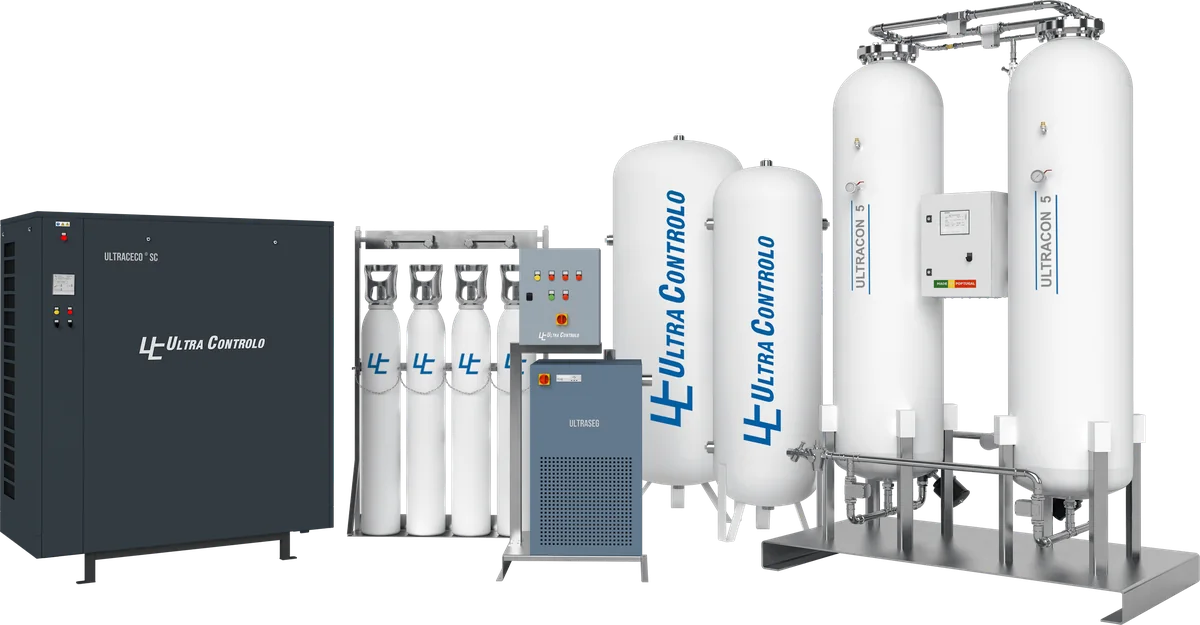
Five points before you buy.
Each point comes from the Ministry of Health’s technical specification for the call MSYD/DGGH/CONV/N° 002/2021, a Word document opened and read in full on 19 November 2026. This page is a summary, not legal advice.
| Point | What the document says |
|---|---|
| 1. One call, not a regulation | A procurement specification for 13 plants in ten cities, with minimum requirements that bidders could improve. |
| 2. Oxygen and monitoring | 93% ± 3% or higher, 24 hours a day, 3 to 6 bar, two analysers and a touchscreen of 5 inches or larger, with oxygen monitoring accurate to ± 1%. |
| 3. Alarms and air quality | Alarms above 80 dB, a low oxygen alarm below 90%, and compressed air under ISO 8573-1. |
| 4. Power and site | Three-phase 380 to 400 VAC, earthing below 5 ohm and a protection panel, for extreme site conditions. |
| 5. Service and documents | Two years of warranty, repairs within 48 hours, spare parts for 10 years and a representative in Bolivia. |
One call, not a regulation.
The document is a procurement specification, so another buyer should check what the Ministry or the regulator asks for today.
The text is the technical specification attached to a Ministry of Health call titled “Adquisición de Plantas Generadoras de Oxígeno para la atención de la COVID-19”. It covers 13 plants, to be installed in La Paz, El Alto, Oruro, Potosí, Cochabamba, Santa Cruz, Trinidad, Tarija, Sucre and Cobija.
The specification says its requirements are a minimum that bidders may improve, and it marks several items with an asterisk explained as recommendations of PAHO, the Pan American Health Organization. The text does not state an issue date.
- Issuer
- Ministry of Health (minsalud.gob.bo)
- Year
- 2021, from the process code
- Equipment
- PSA oxygen generating plant, quantity 13
- Cities
- Ten, from La Paz to Cobija
- Read on
- 19 November 2026
The document does not name the ministry in its text. The issuer is taken from the host that serves the file.
Oxygen and monitoring.
The call asks for 93% ± 3% oxygen or higher, from a plant built for continuous work.
The specification asks for an oxygen concentration of 93% ± 3% according to international standards, or higher, from a plant that works 24 hours a day, 7 days a week. The plant makes oxygen from compressed air by pressure swing adsorption (PSA), with an outlet pressure of 300 to 600 kPa, which is 3 to 6 bar, and a continuous flow to cover 100% of the oxygen demand.
It asks for two oxygen analysers, internal and external, and a control panel in Spanish with a touchscreen of 5 inches or larger. The panel shows oxygen concentration, outdoor air quality, outlet pressure, working hours, alarms and system status, and the oxygen monitoring must be accurate to ± 1%. Remote monitoring from a computer, tablet or mobile phone with a user password is also asked for.
- Concentration
- 93% ± 3%, or higher
- Operation
- 24 hours a day, 7 days a week
- Outlet pressure
- 300 to 600 kPa, 3 to 6 bar
- Analysers
- Two, internal and external
- Monitoring accuracy
- ± 1%
- Cylinder filling
- Booster and filling ramp
Alarms and air quality.
Every alarm is both visual and audible, and the compressed air follows ISO 8573-1.
All alarms are to be visual and audible above 80 dB, and cancellable. The list includes system failure, power failure, low oxygen concentration (below 90% or an adjustable value), outlet pressure below 3 bar, CO2 and CO detection, and a dew point sensor shown on the screen.
The air feed is to follow ISO 8573-1. The call treats an oil-free class 0 screw compressor as an improvement on the request, and bidders attach an ISO 8573-1 (Class 1) certificate or equivalent, or a test report.
- Alarm sound
- Above 80 dB, cancellable
- Low oxygen alarm
- Below 90%, or an adjustable value
- Pressure alarm
- Outlet pressure below 3 bar
- Gas detection
- CO2 and CO
- Air standard
- ISO 8573-1
Power and site.
The call sets a three-phase supply, an earthing limit and a protection panel, for plants built to work in extreme conditions.
The power section asks for a three-phase supply of 380 to 400 VAC at 50 Hz and a protection and earthing system below 5 ohm. The electrical protection panel guards against phase loss, electric discharges, transients, overvoltage, short circuits and overloads, with resettable circuit breakers or replaceable fuses on both the live and the neutral line.
The plant is to be designed for extreme conditions of humidity, dust and temperature, adapted to the ground of the final site. The supplier states the dimensions, the weight and the electrical consumption of each item and of the whole plant, and prepares the requirements for civil works or electrical complements.
- Supply
- Three-phase, 380 to 400 VAC, 50 Hz
- Earthing
- Below 5 ohm
- Protection
- Panel with resettable breakers or fuses on live and neutral
- Site
- Extreme humidity, dust and temperature
- Supplier states
- Dimensions, weight and consumption
The call does not give an altitude or temperature range, so give the manufacturer your real site conditions.
Service and documents.
The call asks for local support, a short repair time and a long supply of spare parts.
The warranty is at least two years, with preventive maintenance in that period, and corrective repairs must not exceed 48 hours. The supplier sells spare parts for a minimum of 10 years after the warranty, and delivery is asked in under 60 days. The brand offered must have a representative or branch legally established in Bolivia.
Bidders attach certificates, among them ISO 13485 and a certificate of commercialisation such as CE, and the call asks for certificates of conformity with standards that include ISO 7396-1 for the pipeline system. The supplier trains operators, with a factory training certificate, and delivers manuals in Spanish.
- Warranty
- At least two years
- Corrective repairs
- No more than 48 hours
- Spare parts
- At least 10 years after the warranty
- Delivery
- Under 60 days
- Local presence
- Representative or branch in Bolivia
- Manuals and training
- In Spanish, with a factory training certificate
Four things to put in writing.
They follow from the five points above and apply to every supplier you compare.
The specification that applies.
Ask the contracting authority which version of the technical specification your tender follows, and whether the Ministry or the regulator has issued other requirements since this call.
The purity, the alarms and the air.
Ask for the guaranteed oxygen concentration, the alarm settings and the air quality standard in writing, together with the certificates the tender asks for.
The site and the supply.
Check your three-phase supply, your earthing value and any generator before the offer is sized, and give the manufacturer the real heat, humidity, dust and altitude of the site.
The local service.
Ask who represents the brand in Bolivia, how fast a repair is made, and how long spare parts are sold. The call put these in writing.
How ULTRAOX specifies purity.
Ultra Controlo is a Portuguese company that designs and manufactures medical gas systems for hospitals.
ULTRAOX plants deliver 93% ± 3% oxygen.
This page does not say whether any plant meets Bolivian requirements or the call described here. That is for the contracting authority and the health authorities to confirm.
- PSA oxygen range
- ULTRAOX SC, ULTRAOX ST and ULTRAOX CO plants, with ULTRACON oxygen generators
- Oxygen grade
- Oxygen 93, 93% ± 3%
- Medical device
- CE 1639, Class IIb, the whole plant as one medical device
- Built to
- EN ISO 7396-1
- Quality system
- ISO 13485:2016, ISO 9001:2015 and ISO 14001
Is this specification a Bolivian regulation?
No. It is the technical specification attached to one Ministry of Health call, from 2021, to buy 13 oxygen generating plants for COVID-19 care. It says its requirements are a minimum that bidders may improve. Other buyers should check what the Ministry or the regulator asks for today.
What oxygen purity does the Bolivian specification ask for?
It asks for an oxygen concentration of 93% ± 3% according to international standards, or higher. The oxygen monitoring must be accurate to ± 1%, and a low oxygen alarm sounds below 90% or at an adjustable value.
What electrical supply does the specification ask for?
A three-phase supply of 380 to 400 VAC at 50 Hz, a protection and earthing system below 5 ohm, and a protection panel with resettable circuit breakers or replaceable fuses on both the live and the neutral line. It does not set an altitude or temperature range.
What service terms did the call ask for?
A warranty of at least two years, corrective repairs within 48 hours, spare parts sold for at least 10 years after the warranty, and a brand representative or branch legally established in Bolivia. Manuals are delivered in Spanish and operators are trained with a factory training certificate.
What documents does Ultra Controlo provide for a tender?
ULTRAOX oxygen plants carry CE marking as Class IIb medical devices through notified body 1639 (SGS), with the whole plant certified as a single medical device, and are built to EN ISO 7396-1. For tenders, Ultra Controlo provides its certificates, CE declarations of conformity and technical dossiers.
Who services an ULTRAOX plant after handover?
UltraCare is Ultra Controlo’s technical assistance programme for its medical gas systems, available 24 hours a day, 365 days a year. It covers preventive maintenance and monitoring, corrective service, original spare parts and rental equipment while a unit is serviced.
ULTRAOX is designed for a minimum life cycle of 150,000 hours, which Ultra Controlo presents as an investment for at least 20 years.
Ready to discuss oxygen for your hospital?
Tell us about your site. Our engineering team sizes the configuration and sends a quote.