Buying a PSA oxygen plant in Benin.
In May 2021 a WHO assessment found four of Benin’s six hospital oxygen plants stopped for lack of maintenance, and restoring them took new parts, repairs and five trained biomedical technicians. This guide sets out those public facts and what to check before you buy.
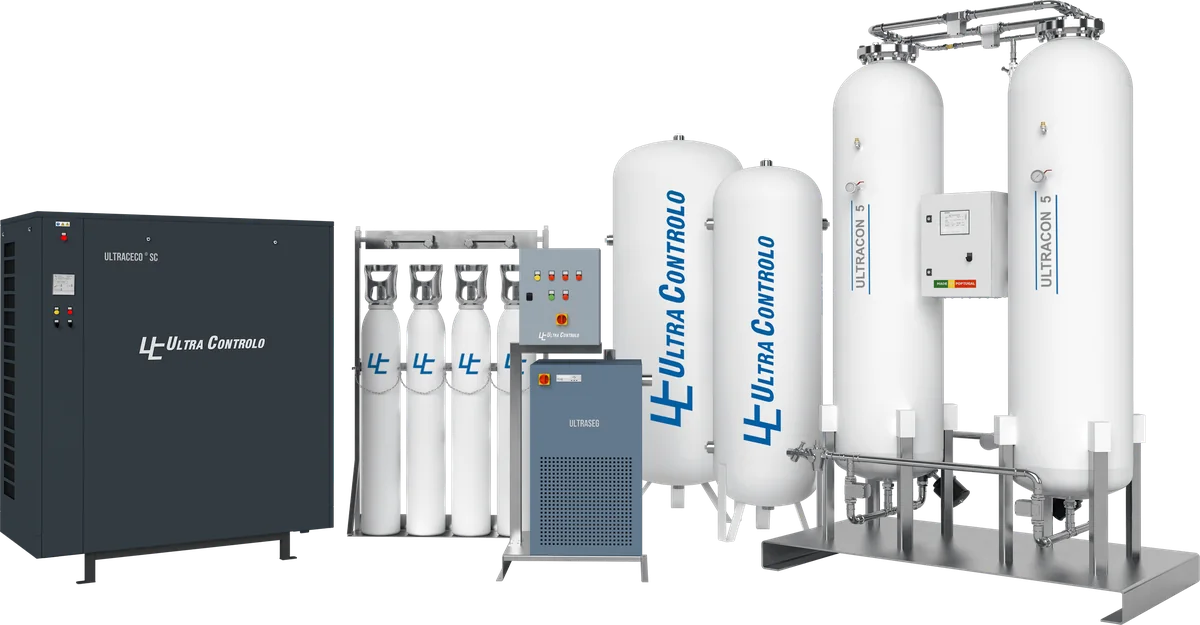
What Benin’s plants teach a buyer.
The fullest public account of hospital oxygen plants in Benin is WHO’s report of plants that stopped, and of what it took to restart them.
WHO Africa reported in November 2022 that its May 2021 assessment found four of the six hospitals with medical oxygen production units completely stopped: the zone hospitals of Djidja, Cové and Djougou and the university departmental hospital centre (CHUD) of Parakou. The French text says the plants had been out of service since 2019 for lack of maintenance and that patients needing oxygen were referred elsewhere.
WHO financed the repairs, with funding from the Government of Canada, replacing air blocks and thermostatic valves and repairing pneumatic connections, and trained five biomedical technicians. It says production was restored at the four facilities. The report adds that some hospitals had bought oxygen from private suppliers, sometimes across borders.
- May 2021 assessment
- Six hospitals with oxygen production units, four of them completely stopped (WHO Africa, 10 November 2022)
- Capacity before the failures
- 15.3 m³ per hour on average in 2015 at Cové, Djidja and Djougou, filling 10 cylinders of 7 m³ a day; 30 m³ per hour and 25 cylinders a day at CHUD Parakou
- National need
- About 280 cylinders of 7 m³ a day in normal times and about 500 a day at the end of 2021 (WHO)
- 2026 donation
- 600 oxygen concentrators for 23 of the 34 health zones, serving at least 23 hospitals and more than 230 health centres (UNICEF Benin, 16 April 2026)
- Access to electricity
- 59% of the population in 2024: 71.6% in towns and 45% in rural areas (World Bank)
- Power outages
- Reported by 86.1% of firms in the 2024 World Bank Enterprise Survey
Concentrators make oxygen at the bedside or in a ward; they are not a central plant. This guide does not cover the registration of medical devices in Benin, because we have not found an official text that names oxygen plants.
Four lessons for the next plant.
Without maintenance, plants stop
WHO found four of six plants idle, out of service since 2019 for lack of maintenance. Patients were referred elsewhere and some hospitals bought oxygen from private suppliers.
A restart needs parts and people
Restoring production took new air blocks and thermostatic valves, repaired pneumatic connections and five trained biomedical technicians, according to WHO.
Demand can almost double
WHO puts Benin’s usual need at about 280 cylinders of 7 m³ a day. During the second COVID-19 wave of 2021 it rose, reaching about 500 a day by the end of the year, beyond local production capacity.
A maintenance pledge at handover
UNICEF says the 600 concentrators received in 2026 go to at least 23 hospitals and more than 230 health centres in seven departments. The health minister reaffirmed the government’s commitment to their judicious use and adequate maintenance.
Where Benin’s public purchases are announced.
The Portail des Marchés Publics du Bénin, read on 19 November 2026, groups procurement plans, general notices, calls for competition and provisional award reports. Suppliers can create free alerts for the calls that interest them, and the portal links to the SIGMAP system and to standard tender documents.
United Nations agencies have also asked for quotations for medical gases. On the UN Global Marketplace, UNOPS published a request for quotation for the supply of medical gases in Benin, RFQ/2026/64118, on 9 August 2026. Its deadline was extended to 18 September 2026, and on 9 October 2026 it was cancelled as unsuccessful after evaluation. A re-tender, RFQ/2026/64963, was published on 12 October 2026 with a deadline of 23 October 2026, which has passed.
Both notices ask suppliers to respond through UNOPS eSourcing, which requires registration on UNGM. The list of requirements is an attachment we did not read, so this page does not say which gases, quantities or sites the request covers.
Three checks before you request a quote.
Short and specific to a purchase in Benin. The general method is in the guides linked below.
Put maintenance in the contract
Benin’s idle plants are the warning. Ask who maintains the plant after the warranty, which spare parts are kept in the country and how many local technicians are trained.
Plan for the grid
The World Bank puts access to electricity at 59% of the population in 2024, and 86.1% of firms surveyed in 2024 reported outages. Tell us what generator or UPS the site has.
Size for cylinders and for a surge
Tell us how many cylinders you use a day and which facilities you supply. In 2015 the zone hospital plants had a filling capacity of 10 cylinders of 7 m³ a day and Parakou 25, and national need nearly doubled in 2021.
Why were hospital oxygen plants in Benin stopped in 2021?
WHO Africa’s report of 10 November 2022 says its May 2021 assessment found four of the six hospitals with oxygen production units completely stopped: the zone hospitals of Djidja, Cové and Djougou and CHUD Parakou. The French text says they had been out of service since 2019 for lack of maintenance.
How were the Benin plants restarted?
WHO says it financed the repairs, with funding from the Government of Canada, including replacing air blocks and thermostatic valves and repairing pneumatic connections, and trained five biomedical technicians to continue the work independently. It reports that production was restored at the four facilities.
How much medical oxygen does Benin need?
WHO reported a usual national need of about 280 cylinders of 7 m³ a day, which rose to about 500 a day by the end of 2021, beyond local production capacity. The head of AISEM, the Ministry of Health’s agency for health infrastructure, equipment and maintenance, is quoted with similar figures.
Who paid for the 600 oxygen concentrators Benin received in 2026?
UNICEF Benin reported on 16 April 2026 that the government had received them with UNICEF support, acquired through donations from individual Chinese donors. They are spread across 23 of the 34 health zones, in the departments of Alibori, Littoral, Atacora, Borgou, Donga, Couffo and Atlantique, and will serve at least 23 hospitals and more than 230 health centres.
Where are public tenders published in Benin?
The Portail des Marchés Publics du Bénin groups procurement plans, general notices, calls for competition and provisional award reports, with free alerts for suppliers. In 2026 UNOPS also used the UN Global Marketplace for two requests for quotation for medical gases in Benin: the first was cancelled as unsuccessful, and the deadline of the second, 23 October 2026, has passed.
Does Ultra Controlo have projects in Benin?
No news story on this site reports an Ultra Controlo project in Benin. This page is a buying guide, built from public sources.
What documents does Ultra Controlo provide for a tender?
ULTRAOX oxygen plants carry CE marking as Class IIb medical devices through notified body 1639 (SGS), with the whole plant certified as a single medical device, and are built to EN ISO 7396-1. For tenders, Ultra Controlo provides its certificates, CE declarations of conformity and technical dossiers.
Who services an ULTRAOX plant after handover?
UltraCare is Ultra Controlo’s technical assistance programme for its medical gas systems, available 24 hours a day, 365 days a year. It covers preventive maintenance and monitoring, corrective service, original spare parts and rental equipment while a unit is serviced.
ULTRAOX is designed for a minimum life cycle of 150,000 hours, which Ultra Controlo presents as an investment for at least 20 years.
Ready to discuss oxygen for your hospital?
Tell us about your site. Our engineering team sizes the configuration and sends a quote.