How to choose medical oxygen cylinders.
To choose medical oxygen cylinders, check seven points: the size by water volume, the pressures, the material and standard, the valve outlet, the colour and marking, the inspection and certification, and how the cylinders will be filled and stored.
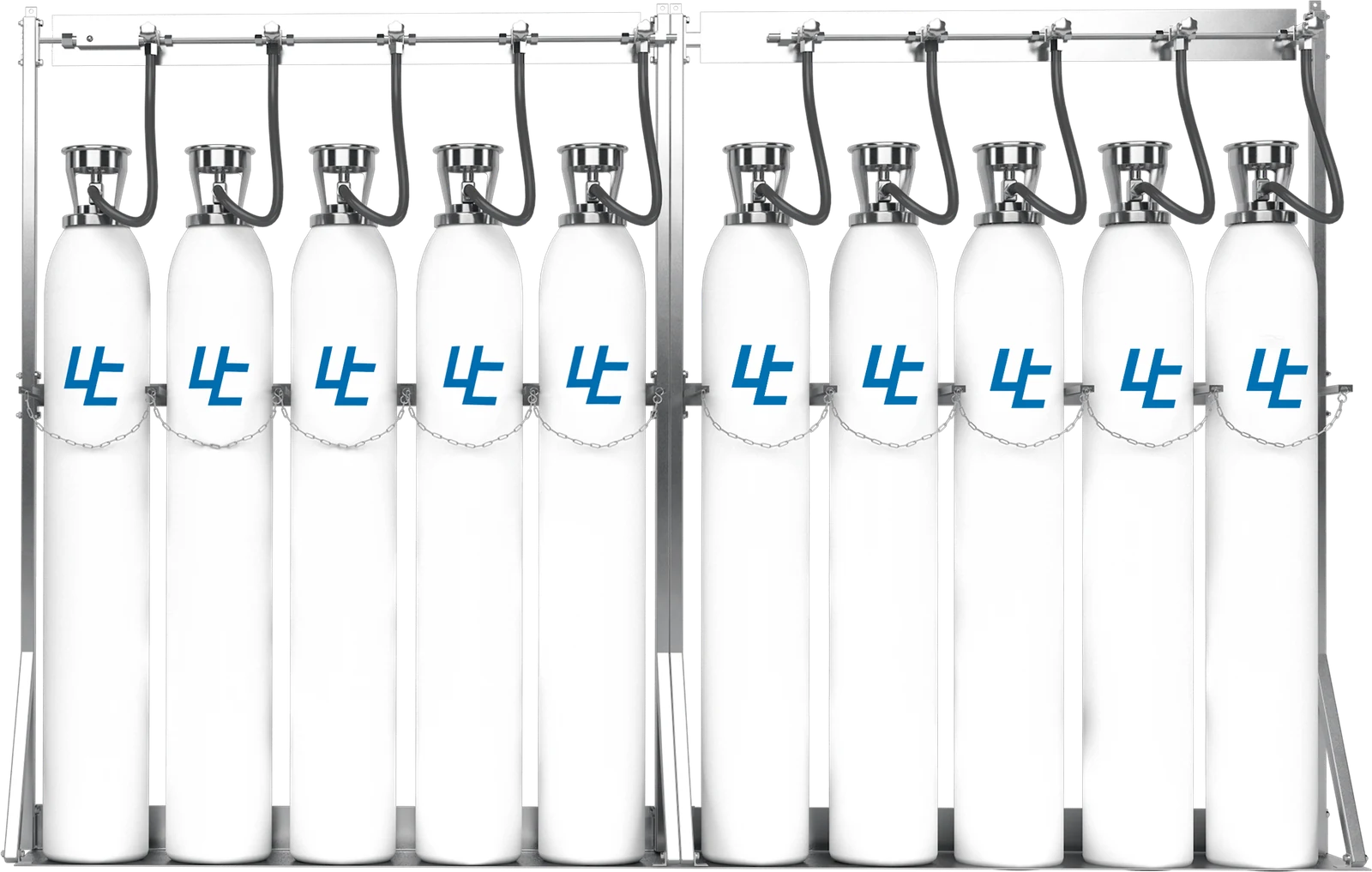
Seven questions before you buy.
Ask every supplier of medical oxygen cylinders the same seven questions, in writing, and compare the answers side by side.
| Check | What to ask |
|---|---|
| 1. Size | What is the water volume of each cylinder, in litres? |
| 2. Pressures | What are the working, filling and test pressures? |
| 3. Material and standard | Is the cylinder steel or aluminium, and to which ISO standard is it made? |
| 4. Valve outlet | Which valve outlet does the cylinder have, and does it match the regulators and filling ramps in use? |
| 5. Colour and marking | Is the cylinder colour-coded and stamped according to the standards that apply? |
| 6. Inspection | Who inspects the cylinders during and after manufacturing? |
| 7. Filling and storage | How will the cylinders be filled and stored? |
The size.
Specify the size by water volume, the one figure that means the same to every supplier.
Suppliers and manufacturers also refer to size by a letter or number system, by the oxygen capacity delivered to the patient or by the internal volume. The Global Fund and Build Health International briefing note on cylinder procurement (8 May 2024) recommends specifying the water volume, which is stamped on the shoulder of ISO 9809 cylinders.
The same note says it is not advisable to quantify oxygen in terms of cylinders, because of the wide variety of cylinder sizes and storage pressures used in practice.
- Manifolds and high flow equipment
- 45 to 50 L cylinders are common
- Patient transport and ambulances
- 5 to 30 L, commonly
The pressures.
Ask for three pressures, not one: working, filled and test.
The note defines the working pressure as the maximum pressure the cylinder is designed to operate at, stamped with the prefix PW on ISO 9809 cylinders, and the filled pressure as the pressure the cylinder is filled to, at or below the working pressure. The test pressure is the pressure the cylinder was tested to when manufactured, generally 1.5 times the working pressure.
The filled pressure depends on the capability and settings of the oxygen booster compressors, and the note says care should always be taken not to exceed the working pressure of the cylinder.
- Nominal working pressure
- Typically 150 bar
- Maximum, standard valve cylinders
- 200 bar
Material and standard.
Steel or aluminium decides which ISO standard the cylinder is made to.
The note says aluminium cylinders are specified by ISO 7866 and steel cylinders by ISO 9809, and that oxygen cylinders are most often made of steel. ISO 9809 has four parts, and the note says most medical gas cylinders fall into part 1 and part 3.
WHO’s technical specifications for health facility based medical oxygen systems (31 December 2024) say medical oxygen cylinders shall be made of steel, aluminium or composite according to internationally recognized standards.
Ultra Controlo supplies high pressure oxygen cylinders made to international standards, in 34CrMo4 steel. The Ultra Controlo product page says the cylinders are internally surface treated and cleaned to receive direct medical oxygen.
The valve outlet.
The valve outlet has to match the regulators and filling ramps you already use.
The note says valve outlets are gas specific, so valves for medical air, nitrous oxide or oxygen cannot be interchanged. Larger cylinders will have what is commonly referred to as a bullnose valve, while smaller ones may have a pin index valve.
It names CGA 540, BSI 341 No. 3 and AFNOR type F as examples of oxygen bullnose standards that are not compatible with each other, and says that if no standard has been adopted, it is important that the valve selected matches the valves already in use locally.
- CGA V-1
- 540
- BS341-3
- No. 3
- NF E29-650
- Type F
- DIN 477
- No. 9
Colour and marking.
The colour code and the stamp mark the gas content, the manufacturer and the inspection body.
According to the note, ISO 32 specifies the colour of cylinders based on their gas contents, and ISO 13769 covers the information stamped permanently into the shoulder of the cylinder. WHO’s 2024 specification says medical oxygen cylinders shall be colour-coded to align with contextual norms and/or standards, and hard-stamped with design standards, manufacturing details and regulatory markings.
- Stamp marking
- ISO 13769
- Colour by gas contents
- ISO 32
- Valve threads
- ISO 11363
Inspection and certification.
Ask who inspects the cylinders, and which certificate they carry.
The note says ISO 9809 specifies tests and inspections that must be carried out by inspectors during and after manufacturing, and that countries often have requirements on who qualifies as an inspector. If there is none, it recommends that the tender require a mutually agreed and independent inspecting agency.
As an example of clearance from a well-regulated market, WHO’s 2024 specification gives the EU: TPED conformance indicated with a pi mark.
The Ultra Controlo product page says that cylinder frames can be sized according to the needs of each customer.
Filling and storage.
If the hospital or the region will fill its own cylinders, plan the filling station together with the cylinders.
WHO’s 2024 specification says medical oxygen cylinders shall be dedicated to medical oxygen use and transported and stored with a valve guard or cap.
Connect ULTRAFIL to ULTRAOX and fill your own medical oxygen cylinders on site.
An ULTRAFIL filling station takes racks of 5, 10 or 20 cylinders and fills them at a maximum pressure of 150 to 207 bar, depending on the model.
Common questions about choosing oxygen cylinders.
Questions buyers ask about medical oxygen cylinders. More on the medical gas answers page.
What should I compare when buying medical oxygen cylinders?
To choose medical oxygen cylinders, check seven points: the size by water volume, the pressures, the material and standard, the valve outlet, the colour and marking, the inspection and certification, and how the cylinders will be filled and stored.
How is the size of a medical oxygen cylinder specified?
The Global Fund and Build Health International briefing note on cylinder procurement (8 May 2024) recommends specifying the size by water volume, which is stamped on the shoulder of ISO 9809 cylinders, because suppliers also use letters, numbers, delivered oxygen capacity or internal volume.
Are oxygen cylinder valves the same everywhere?
No. The Global Fund note names CGA 540, BSI 341 No. 3 and AFNOR type F as examples of oxygen bullnose standards that are not compatible with each other, and says that if no standard has been adopted, it is important that the valve selected matches the valves already in use locally.
Does Ultra Controlo supply oxygen cylinders?
Yes. Ultra Controlo supplies high pressure oxygen cylinders made to international standards, in 34CrMo4 steel, with cylinder frames that can be sized according to the needs of each customer.
Ready to discuss oxygen cylinders?
Tell us about your site. Our engineering team sizes the configuration and sends a quote.