Buying a PSA oxygen plant in Laos.
Lao PDR’s first provincial oxygen plant opened at Champasack in February 2023, and WHO then donated three containerised plants to provincial hospitals, one of which also gained oxygen piping to the bedside. In 2025 UNOPS invited bids for medical gas and patient support systems for Laos. This guide sets out those public facts and what to check before you buy.
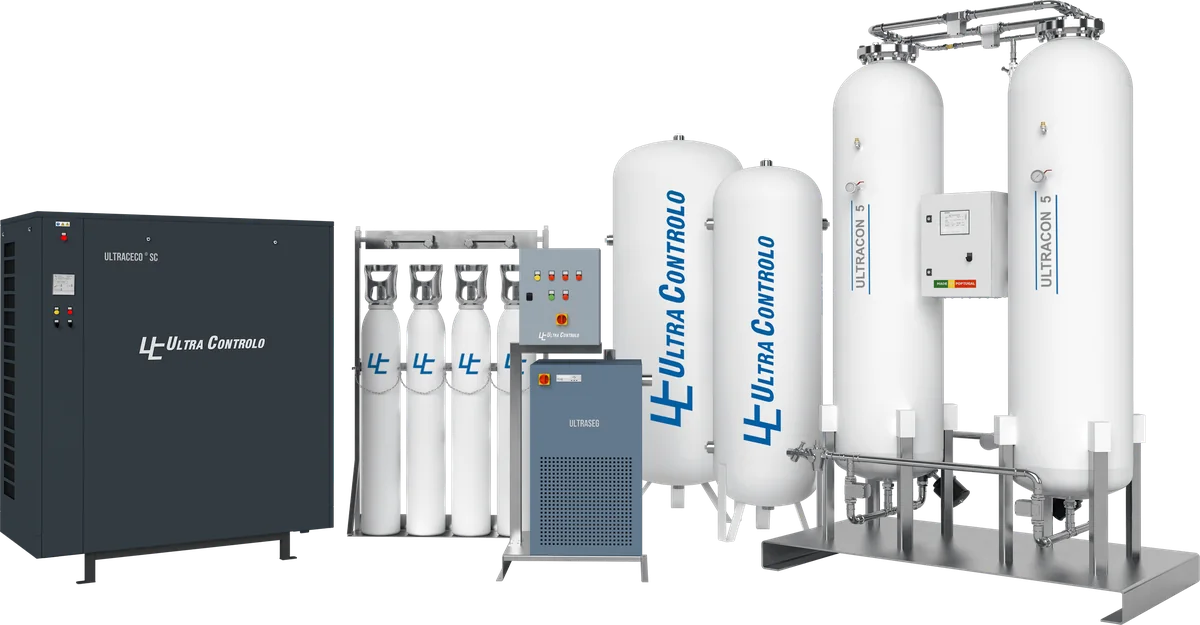
Why Lao PDR is making its own oxygen.
Lao PDR’s first provincial medical oxygen plant opened at Champasack Provincial Hospital in February 2023, with support from the Global Fund and the Clinton Health Access Initiative (CHAI). The second opened at Savannakhet Provincial Hospital on 8 September 2023, supported by WHO.
WHO’s release of that day said oxygen production infrastructure in Lao PDR was limited, and its photo caption calls the Savannakhet unit a PSA medical oxygen plant. It is one of three containerised plants donated by WHO to the Savannakhet, Oudomxay and Luang Prabang provincial hospitals. Along with the oxygen production and refilling systems, the support included construction of facilities, backup power generators, three years’ worth of spare parts and training for technicians at each location.
A WHO spotlight of 20 May 2024 says unpredictable oxygen supply in Lao PDR, often from neighbouring countries, and substantial gaps in distribution networks and hospital delivery systems, particularly at provincial level, raised awareness of the need for sustainable solutions. An undated PATH infographic, describing work as of 2020, says the Ministry of Health, with support from CHAI and other partners, assessed 158 public hospitals and made site assessments for incoming PSA plants at four provincial hospitals, which included assessing and fixing broken piping at Luang Prabang.
- First provincial plant
- Champasack Provincial Hospital, opened in February 2023 with support from the Global Fund and CHAI (WHO, 8 September 2023)
- WHO donation
- Three containerised plants for the Savannakhet, Oudomxay and Luang Prabang provincial hospitals, with backup power generators, three years’ worth of spare parts and technician training (WHO)
- Savannakhet piping
- More than 300 metres of piping, a central control unit, two backup systems and 55 outlets, supported by USAID and implemented by WHO (WHO, 20 May 2024)
- Biomedical engineering
- Training and support for Savannakhet hospital staff from the Korea Foundation for International Healthcare, KOFIH (WHO, 20 May 2024)
- Medical gas tender
- UNOPS ITB/2025/55458, published on 8 January 2025, closed on 13 February 2025 (UNGM)
- Earlier assessment
- 158 public hospitals assessed nationwide, and site assessments for incoming PSA plants at four provincial hospitals (PATH, work as of 2020)
WHO and PATH figures are given as published. This guide does not cover the registration of medical devices in Laos.
What came with the provincial plants.
Backup power and spare parts
WHO’s support for the three plants included backup power generators and three years’ worth of spare parts. In WHO’s 2023 release, the donation is also described as an opportunity to improve electrical and other related infrastructure and engineering capacity for hospitals.
Piped to the bedside at Savannakhet
In parallel with construction of the plant, a USAID-supported, WHO-implemented oxygen piping and distribution system was installed at Savannakhet Provincial Hospital. WHO reported in May 2024 that it brings oxygen to the bedside of high-risk patients in critical wards such as the emergency room, intensive care unit, cardiology, surgical and neonatal units.
Why the hospital wanted piping
Quoted in WHO’s 2024 spotlight, the hospital’s management says that delivering oxygen to critical patients used to mean moving oxygen tanks around the hospital, and that the piping system has helped reduce costs. WHO also reports that KOFIH offered training and support in biomedical engineering to the hospital’s staff.
What the reports leave out
Neither WHO text names the manufacturer or installer of the three WHO plants, gives their output in m³/h or describes a tender for them. The spotlight gives no pipe material, pressures or standard for the Savannakhet system.
What UNOPS asked of bidders.
Read on 21 November 2026 on UNGM, with the amendments and clarifications UNOPS added to the notice. The deadline has passed. The notice does not name the hospital or a funder, and its answers belong to this one tender, not to Laos in general.
| Point | What the notice and its clarifications say |
|---|---|
| Reference | ITB/2025/55458, Procurement of Medical Gas and Patient Support Systems for Laos, published on 8 January 2025 |
| Deadline | 13 February 2025 at 05:00 GMT, after extensions by amendments 4 and 6; the notice is marked expired |
| Outside the supplier’s scope | Piping from the main plant to the beds and the civil works, both for separate contractors. The plants connect to a manifold in the plant room, and the bed head units to the piping at wall level. |
| Oxygen supply | Two independent lines able to guarantee continuous supply, one main and one back-up, with the second generator for back-up and filling; a 2x10 automatic changeover accepted for the cylinder back-up |
| Single failure | The design had to keep supplying oxygen and medical air to the hospital under a single failure of any component |
| Medical air and vacuum | Three medical air compressors; at least two vacuum pumps |
| Plant room | 45 sqm in amendment 3, then 72 sqm, with two rooms merged and two walls to be demolished, and one door 2 m wide and 2.6 m high; the space was not ready during bidding, with works due within two months |
| Power supply | UPS devices protecting the controllers of the oxygen and medical air generation systems, with at least 30 minutes of autonomy (amendment 8) |
| Filling | The required output of the oil-free oxygen booster compressor was lowered from at least 80 m³/hr to at least 30 m³/hr (amendment 7) |
| Spares and consumables | Their availability was mandatory and could not be met by a one-time upfront purchase |
Where oxygen calls for Laos have appeared.
The medical gas tender read for this guide was published by UNOPS on the UN Global Marketplace (UNGM) on 8 January 2025, with responses through the UNOPS eSourcing system via the UNGM portal.
The WHO plants came as a WHO donation and the Savannakhet piping with USAID support, and the WHO texts describe no tender for either. The PATH infographic says an oxygen availability gap analysis informed the development of a long-term procurement plan for PSA oxygen plants in provincial hospitals; it does not say how those plants would be bought.
This guide covers these sources only. It does not report tenders run by Lao public buyers on national channels.
Three checks before you request a quote.
Short and specific to a purchase in Laos. The general method is in the guides linked below.
Know who is buying
Ask whether the buyer is the Ministry of Health, a provincial hospital or a donor or UN agency. In the cases read for this guide, the Global Fund and CHAI supported the Champasack plant, WHO donated three plants, and UNOPS ran the 2025 medical gas tender.
Draw the scope line
In the 2025 UNOPS tender the piping to the beds and the civil works were outside the supplier’s scope, and the plant room was still being prepared during bidding. Tell us what already exists on site, who lays the pipeline and where the plant room will stand.
Plan backup, spares and training
UNOPS asked for a main and a back-up oxygen line and at least 30 minutes of UPS autonomy for the controllers. WHO’s plants came with backup generators, three years’ worth of spare parts and technician training. Tell us what backup power the site has, and settle spares and training in the offer.
Who funded Lao PDR’s first provincial oxygen plants?
According to WHO’s release of 8 September 2023, the first provincial plant opened at Champasack Provincial Hospital in February 2023 with support from the Global Fund and CHAI. WHO then donated three containerised plants for the Savannakhet, Oudomxay and Luang Prabang provincial hospitals, with construction of facilities, backup power generators, three years’ worth of spare parts and training for technicians at each location.
The WHO texts describe a donation, not a tender, and do not name a supplier.
What did the Savannakhet oxygen piping system include?
WHO’s spotlight of 20 May 2024 says the USAID-supported, WHO-implemented system at Savannakhet Provincial Hospital includes more than 300 metres of piping, a central control unit, two backup systems and 55 outlets, and was expected to support over 3,200 high-risk or vulnerable patients every year. It was installed in parallel with construction of the hospital’s oxygen plant.
The spotlight gives no pipe material, pressures or installer.
Is the 2025 UNOPS medical gas tender for Laos still open?
No. UNOPS invitation to bid ITB/2025/55458, Procurement of Medical Gas and Patient Support Systems for Laos, was published on UNGM on 8 January 2025. After the extensions in amendments 4 and 6, the deadline was 13 February 2025, and the notice is marked expired. It does not name a funder or the hospital.
What did UNOPS answer bidders about the plant room and backup?
In its clarifications to ITB/2025/55458, UNOPS set the plant room at 72 sqm, with two rooms merged and two walls to be demolished, and one door 2 m wide and 2.6 m high. It required two independent oxygen lines, one main and one back-up, accepted a 2x10 automatic changeover for the cylinder back-up, and by amendment 8 asked for UPS devices with at least 30 minutes of autonomy to protect the controllers.
These are answers on one tender, not general rules for Laos.
Does Ultra Controlo have projects in Laos?
No news story on this site reports an Ultra Controlo project in Laos. This page is a buying guide, built from public sources.
What documents does Ultra Controlo provide for a tender?
ULTRAOX oxygen plants carry CE marking as Class IIb medical devices through notified body 1639 (SGS), with the whole plant certified as a single medical device, and are built to EN ISO 7396-1. For tenders, Ultra Controlo provides its certificates, CE declarations of conformity and technical dossiers.
Learn more
Containerised PSA oxygen plant
Medical gas pipeline systems
PSA oxygen cylinder filling plant
View ULTRAOX
- Who funded Lao PDR’s first provincial oxygen plants?
- What did Savannakhet hospital’s oxygen piping system include?
- What did UNOPS ask of bidders in its 2025 Laos medical gas tender?
- How did a 2025 UNOPS Laos tender set the plant room and backup?
- Does a PSA plant need a backup generator or UPS?
- Floor, doors and finishes of a PSA plant room
Ready to discuss oxygen for your hospital?
Tell us about your site. Our engineering team sizes the configuration and sends a quote.