Wineries. Press air, inert gas and bottling vacuum.
In a pneumatic wine press, compressed air pushes a membrane against the grapes to extract the must, as a 2019 University of Palermo study describes; the Australian Wine Research Institute says most modern bottling lines displace about 60 to 80% of headspace oxygen by vacuum or inert gas. Ultra Controlo distributes and services Gardner Denver oil-free compressors and Elmo Rietschle screw vacuum pumps, which the maker lists for beverage bottle filling.
Headspace oxygen displaced on most modern bottling lines, about, per AWRI
02
1mg/L
Extra headspace oxygen that cylindrical closures applied without vacuum can add, per AWRI
Where the air and gas go
From the press to the bottle.
A university study, the OIV code of oenological practices, the Australian Wine Research Institute and the US Department of Energy describe these uses.
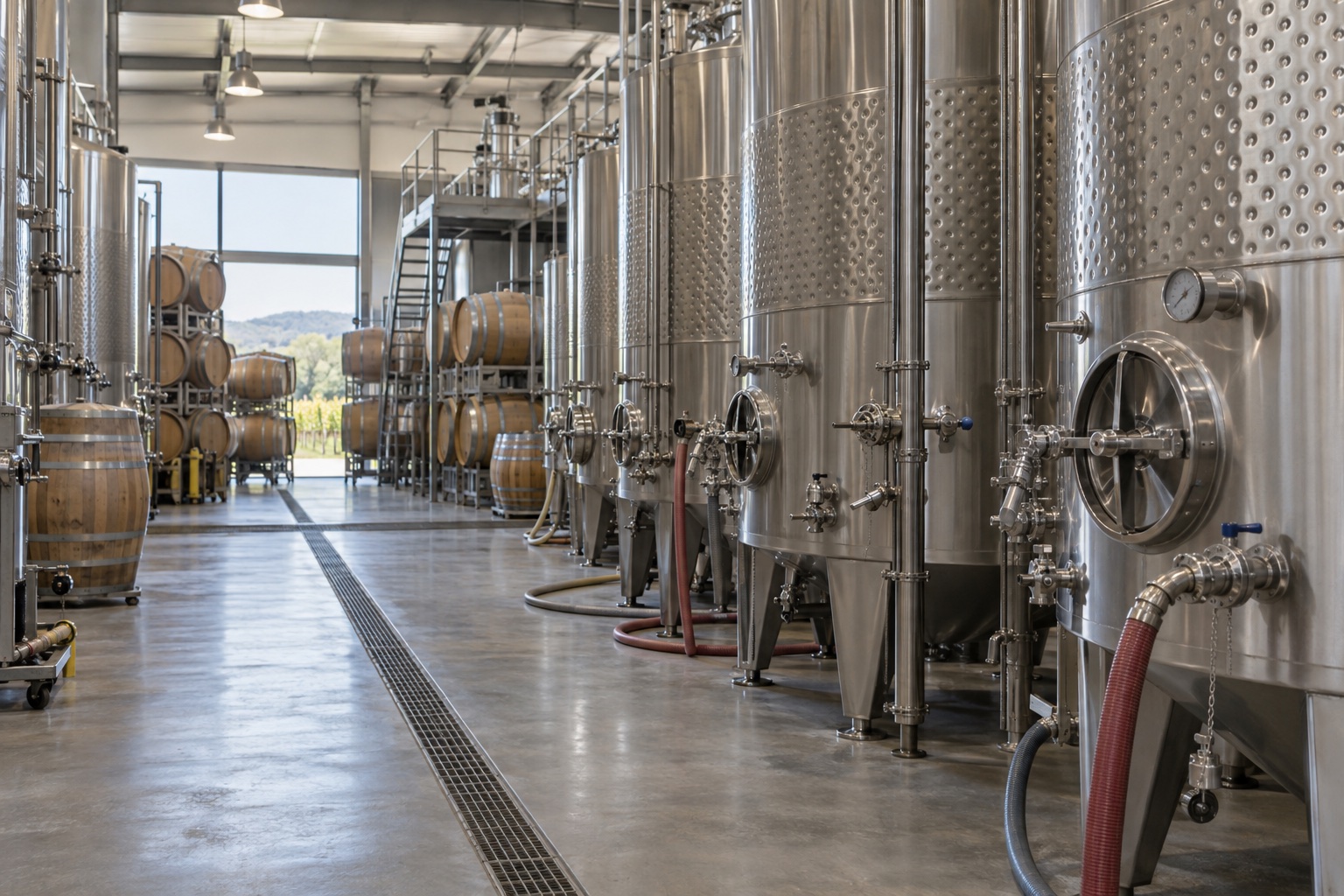
Pressing
Pneumatic membrane press
Compressed air pushes a food grade membrane against the grapes in a rotating stainless steel cylinder; in the 2019 trial, the pressure rose in steps from 0.2 to 1.5 bar.
Pressing
Long cycles, oxygen contact
Common pneumatic presses run a discontinuous cycle of about 3 hours, during which oxygen in contact with the grapes can modify the future wine; the study compared air with nitrogen.
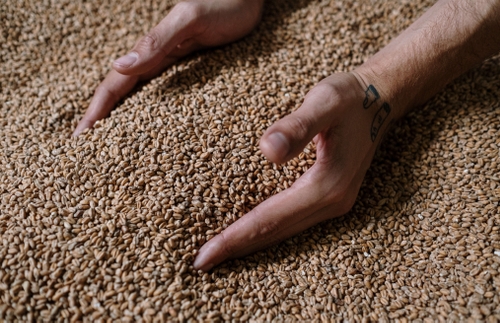
Must
Inert atmosphere
The OIV code admits protecting must under nitrogen, carbon dioxide and/or argon, to avoid oxidation and the growth of aerobic organisms.
Sparkling wine
Isobaric clarification
For decanting and racking, centrifugation and filtering under isobaric conditions, the OIV code says the pressure comes from an inert gas or compressed air.
Bottling
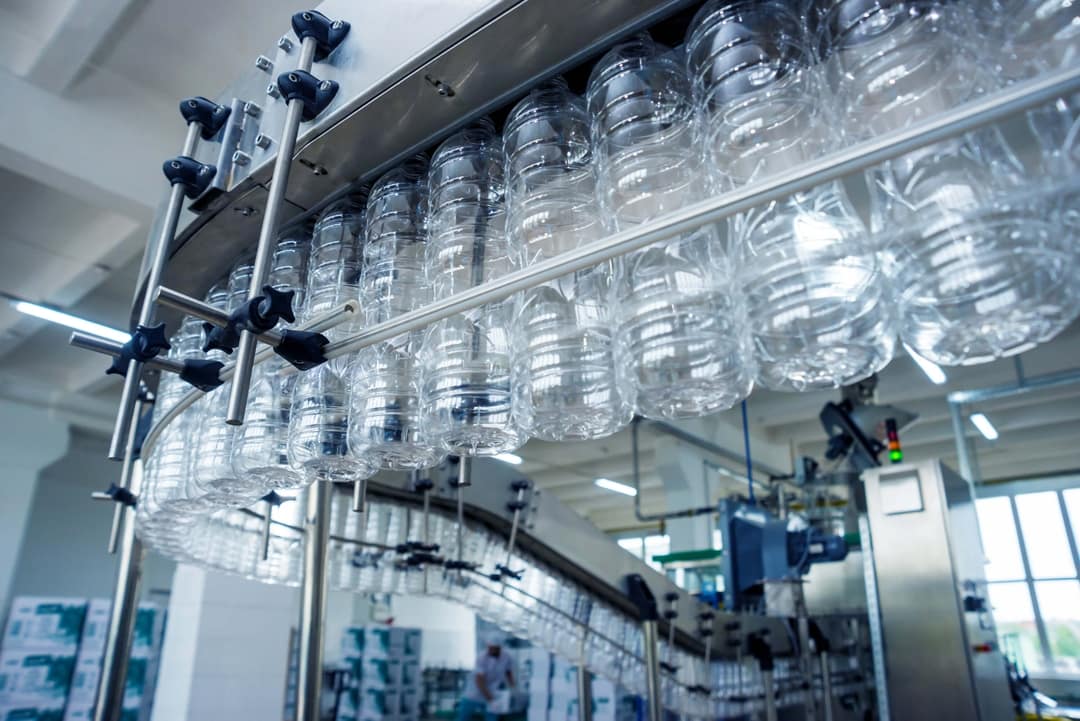
Vacuum or inert gas
Wine is sparged with nitrogen and/or carbon dioxide before bottling, and most modern lines displace about 60 to 80% of headspace oxygen by vacuum or inert gas.
Bottling
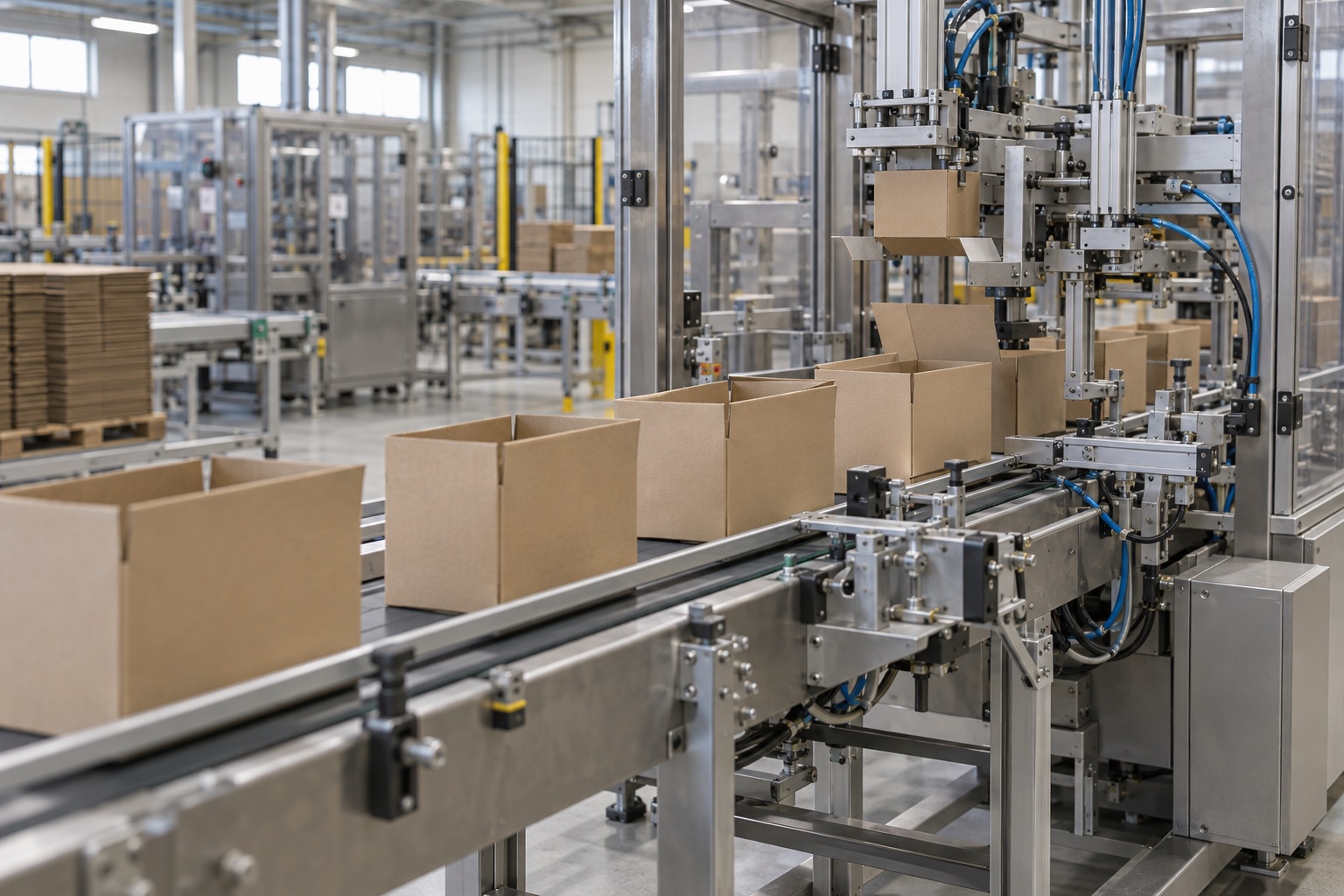
Controls and conveying
Bottling, controls and actuators and conveying are among the DOE example uses of compressed air in food plants.
Sources: Chemical Engineering Transactions vol. 75 (2019), University of Palermo; OIV, International Code of Oenological Practices, II.2.2.5 and II.4.3.4; The Australian Wine Research Institute; US DOE and Compressed Air Challenge sourcebook (2016), Table 1.1.
Oxygen at bottling
Where vacuum earns its place.
The Australian Wine Research Institute describes how bottling lines keep oxygen out of the wine.
Before filling
Sparging
The gas content of the blend is adjusted by sparging with nitrogen and/or carbon dioxide; empty bottles are sparged with an inert gas and the filler tank is kept under inert gas cover.
Source: AWRI, Oxygen pick-up during packaging.
Headspace
60 to 80% displaced
Most modern bottling lines displace about 60 to 80% of the oxygen from the headspace through vacuum or inert gas application.
Source: AWRI, Oxygen pick-up during packaging.
Closures
1 mg/L more without vacuum
AWRI case studies have shown that cylindrical closures applied without a vacuum can result in an additional 1 mg/L of headspace oxygen pickup.
Source: AWRI, Oxygen pick-up during packaging.
Source: The Australian Wine Research Institute, Oxygen pick-up during packaging: understanding total package oxygen.
What we supply
For the press air and the bottling line.
Equipment that the Ultra Controlo catalogue and brochure, and the partner makers, tie to beverage, food and bottling.
Sources: Ultra Controlo Industrial 2026 catalogue, pp. 11, 12 and 17; Ultra Controlo industrial brochure; Gardner Denver, oil-free air compressors and EnviroAire T/TVS pages; Elmo Rietschle, IDS series page.
One supplier. Made and serviced in Portugal.
Ultra Controlo is a Portuguese manufacturer of compressed air, vacuum and technical gas systems, with 40 years of experience. We design, assemble and test our own compressors, dryers and carbon towers in Portugal, and supply and service five partner brands.
Our own lines
ULTRASCREW compressors, ULTRASEC and ULTRADRY dryers and ULTRAK activated carbon towers.
Preventive and corrective maintenance, original spare parts and emergency support, by our own team.
Source: Ultra Controlo Industrial 2026 catalogue, pp. 3, 10, 16, 17 and 22.
Questions
Wineries: questions and answers.
What pressure does a pneumatic wine press use?
In the 2019 University of Palermo trial published in Chemical Engineering Transactions, the closed tank pneumatic press ran a sequential cycle with a maximum working pressure of 1.5 bar, applied in steps from 0.2 bar.
Can compressed air be used in contact with wine?
The OIV International Code of Oenological Practices allows an inert gas or compressed air to provide the pressure for isobaric clarification of sparkling wine; for protecting must from air, it names nitrogen, carbon dioxide and argon.
How much headspace oxygen does a bottling line remove?
The Australian Wine Research Institute says most modern bottling lines displace about 60 to 80% of the oxygen from the headspace through vacuum or inert gas, and that cylindrical closures applied without a vacuum can add 1 mg/L of headspace oxygen pickup.
Does a winery need oil-free compressed air?
The Compressed Air Challenge Fact Sheet #1 (May 2026) places food process air in its process air level and says lubricant-free air can come from lubricant-free compressors or from lubricant-injected ones with extra filtration, weighed against the risk of product contamination.
What does Ultra Controlo supply for wineries?
It distributes and services Gardner Denver oil-free screw compressors, which the maker lists for food and beverage, and Elmo Rietschle IDS screw vacuum pumps, listed by the maker for beverage bottle filling; its brochure lists the ULTRADRY dryer for the food industry.