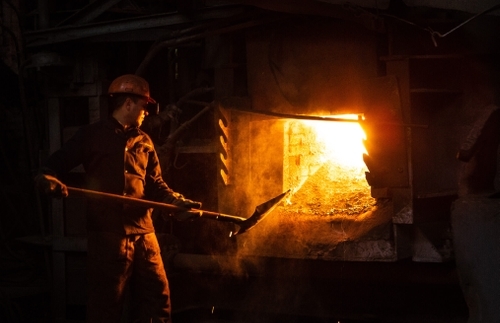
Industrial furnaces. Oxygen for firing and melting.
Glass furnaces that burn fuel with oxygen instead of air significantly reduce NOx emissions and fuel use per ton of glass, according to a 2001 paper by the US Department of Energy and Energetics, and EU reference documents describe oxygen in steel converters, arc furnaces, cupolas and magnesia kilns. Ultra Controlo supplies the ULTRAOX VSA oxygen plant, whose datasheet lists industrial furnaces among its applications.
Oxygen purity that VPSA makes economical for glass furnaces, per a DOE paper (ACEEE, 2001)
02
50–70%
NOx cut achievable with oxy-fuel vs a regenerator furnace, per Bradley University (ACEEE, 2007)
03
22–25%
Oxygen in an enriched cold blast cupola, per EU BREF (2024)
04
75–95%
Oxygen from ULTRAOX VSA, at 50 kPa
Where the oxygen goes
Six furnaces that take oxygen.
A 2001 US DOE paper and the EU reference documents for iron and steel (2013), foundries (2024) and cement, lime and magnesium oxide (2013) describe these uses.
Glass
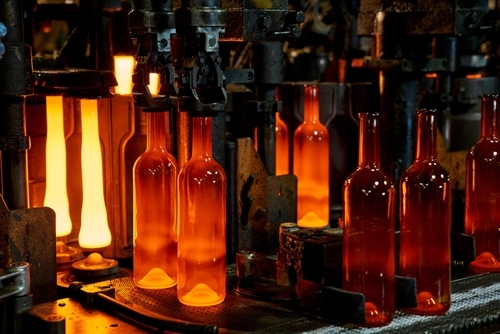
Oxy-fuel glass furnaces
Oxygen replaces air in combustion, which significantly reduces NOx emissions and the fuel consumption per ton of glass produced (DOE, 2001).
Steel
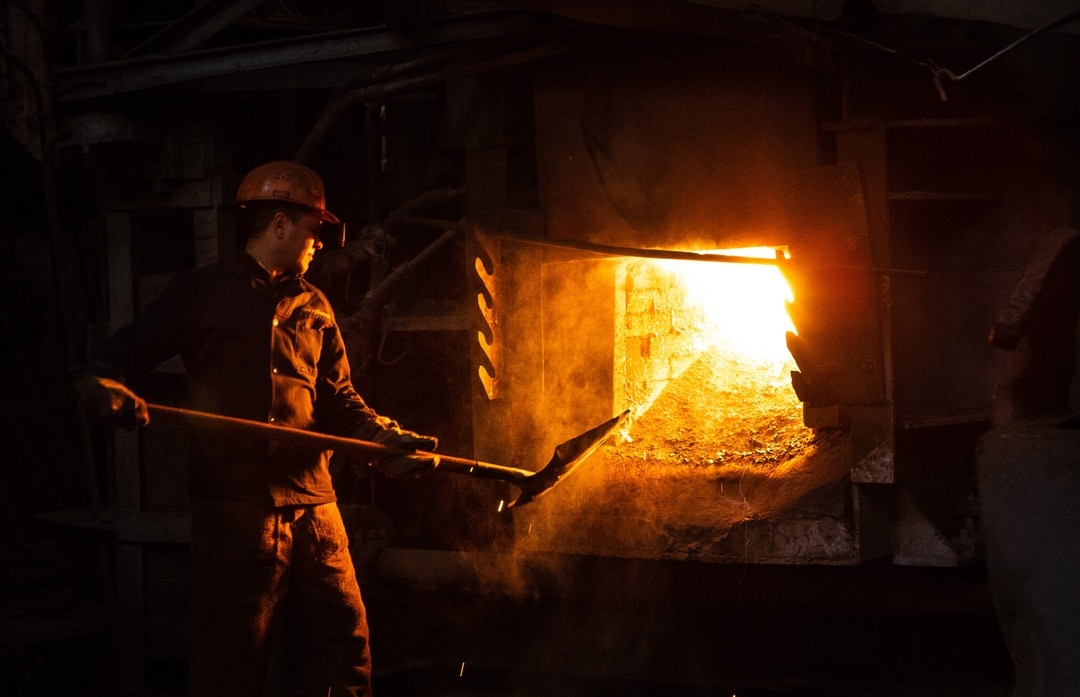
Basic oxygen converter
Pure oxygen, over 99%, from an air separation plant is blown onto the liquid hot metal through a water-cooled lance (EU BREF, 2013).
Steel
Electric arc furnace
Oxygen lances and oxy-fuel burners assist the early stages of melting; oxygen also decarburises the melt and removes elements such as phosphorus and silicon (EU BREF, 2013).
Iron
Blast furnace
A hot air blast enriched with oxygen is injected at tuyère level, and EU plants record oxygen enrichment and oxy-coal injection (EU BREF, 2013).
Foundry
Cupola furnace
Oxygen goes into the blast, the coke bed or the tuyères and raises the combustion temperature; the BREF calls it the standard technique for cold blast cupolas (EU BREF, 2024).
Magnesia
Sinter kilns
Shaft kilns with a rotating grate reach 2,200 °C and need an oxygen enriched combustion air blast; oxygen can also raise the efficiency of the firing (EU BREF, 2013).
Sources: E. Levine (US DOE) and K. Jamison (Energetics), Oxy-Fuel Firing for the Glass Industry: An Update, ACEEE (2001); D. P. Mehta and A. Nayak (Bradley University), Recent Trends in Oxy-Fuel, Air-Fuel and Hybrid Combustion Technologies, ACEEE Summer Study on Energy Efficiency in Industry (2007); European Commission JRC BREFs: Iron and Steel Production (2013), Smitheries and Foundries (2024), Cement, Lime and Magnesium Oxide (2013), sections 3.2.3.2.2.2 and 3.4.3.
Choosing the oxygen supply
Adsorption, liquid or cryogenic.
A 2001 paper by the US Department of Energy and Energetics names three primary ways to supply oxygen to glass furnaces; the choice depends on consumption, electricity costs and the distance to existing oxygen plants.
Adsorption
VPSA up to 120 TPD
VPSA, a point-of-use supply of 90 to 95% oxygen, is generally the low-cost choice for glass industry purity up to the 120 tons of glass per day range; the paper rated it more efficient than VSA and PSA.
Source: Levine and Jamison, ACEEE (2001).
Liquid
Not economic from 10 TPD
Merchant liquid supplies are not economic for furnaces producing at least 10 tons of glass a day, which the paper says is the vast majority of glass plants.
Source: Levine and Jamison, ACEEE (2001).
Cryogenic
Above 200 TPD
Cryogenic production allows higher purity but generally needs too much capital to be cost-effective unless the furnace produces more than 200 tons of glass a day.
Source: Levine and Jamison, ACEEE (2001).
Findings as of 2001, for glass furnaces. ULTRAOX VSA delivers 75% to 95% oxygen at 50 kPa, below the over 99% that the iron and steel BREF describes for the LD converter. Sources: ACEEE (2001); EU BREF (2013); ULTRAOX VSA datasheet.
What we supply
For the burner.
The oxygen plant whose datasheet lists industrial furnaces, and the service programme for Ultra Controlo equipment and partner brands.
Sources: ULTRAOX VSA datasheet, pp. 2 and 3; Ultra Controlo Industrial 2026 catalogue, p. 22.
One supplier. Made and serviced in Portugal.
Ultra Controlo is a Portuguese manufacturer of compressed air, vacuum and technical gas systems, with 40 years of experience. We design, assemble and test our own compressors, dryers and carbon towers in Portugal, and supply and service five partner brands.
Our own lines
ULTRASCREW compressors, ULTRASEC and ULTRADRY dryers and ULTRAK activated carbon towers.
Preventive and corrective maintenance, original spare parts and emergency support, by our own team.
Source: Ultra Controlo Industrial 2026 catalogue, pp. 3, 10, 16, 17 and 22.
Questions
Industrial furnaces: questions and answers.
Why do glass furnaces use oxy-fuel firing?
A 2001 paper by the US Department of Energy and Energetics says oxy-fuel furnaces, which burn fuel with oxygen instead of air, significantly reduce NOx emissions and the fuel used per ton of glass; a 2007 ACEEE paper puts the NOx cut achievable with proper furnace design and burner selection at 50 to 70% versus a regenerator furnace.
What oxygen purity do oxy-fuel glass furnaces use?
The 2001 paper by the DOE and Energetics describes VPSA as a point-of-use supply that makes 90 to 95% purity oxygen more economical and convenient for glass furnaces, while cryogenic production allows higher purity.
What oxygen level is used in an enriched cold blast cupola?
For cold blast cupolas, the 2024 EU foundries BREF says the oxygen level of the oxidising air mixture is usually 22% to 25%, an enrichment of 1% to 4%, and that the economic case has to be established case by case.
Do magnesia kilns use oxygen?
The 2013 EU BREF for cement, lime and magnesium oxide says shaft kilns with a rotating grate reach 2,200 °C and need an oxygen enriched combustion air blast, and that oxygen enriched combustion air can increase the efficiency of the firing process.
Does Ultra Controlo supply oxygen for furnaces?
The ULTRAOX VSA datasheet lists industrial furnaces among its applications. The plant delivers 75% to 95% oxygen at 50 kPa, with an additional oxygen booster for higher pressures on demand, and can replace cryogenic systems with liquid oxygen tanks.