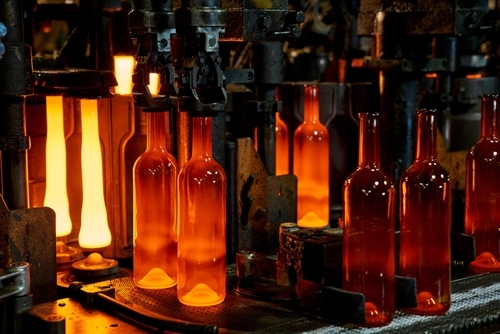
Glass and ceramics. Clean, dry air and furnace oxygen.
The US Department of Energy lists conveying, blending, mixing, controls and actuators, glass blowing and moulding, and cooling as compressed air uses in stone, clay and glass plants. The Ultra Controlo Industrial 2026 catalogue offers oil-free compressors, from partner brand Gardner Denver, and air treatment chains for bottle, jar, technical glass and industrial ceramics lines, and the datasheet of the ULTRAOX VSA oxygen plant lists industrial furnaces.
Oxygen purity from on-site VPSA for glass furnaces, per a DOE paper (ACEEE, 2001)
02
50–70%
NOx reduction of oxy-fuel vs a regenerator furnace, per Bradley University (ACEEE, 2007)
03
200TPD
Tons of glass a day below which cryogenic oxygen is generally not cost-effective, per a DOE paper (ACEEE, 2001)
04
75–95%
Oxygen from ULTRAOX VSA, at 50 kPa
Where the air goes
Six jobs for air and oxygen in a glass plant.
The US Department of Energy groups glass with stone and clay and lists these example uses of compressed air; a DOE paper describes oxygen in oxy-fuel glass furnaces.
Forming
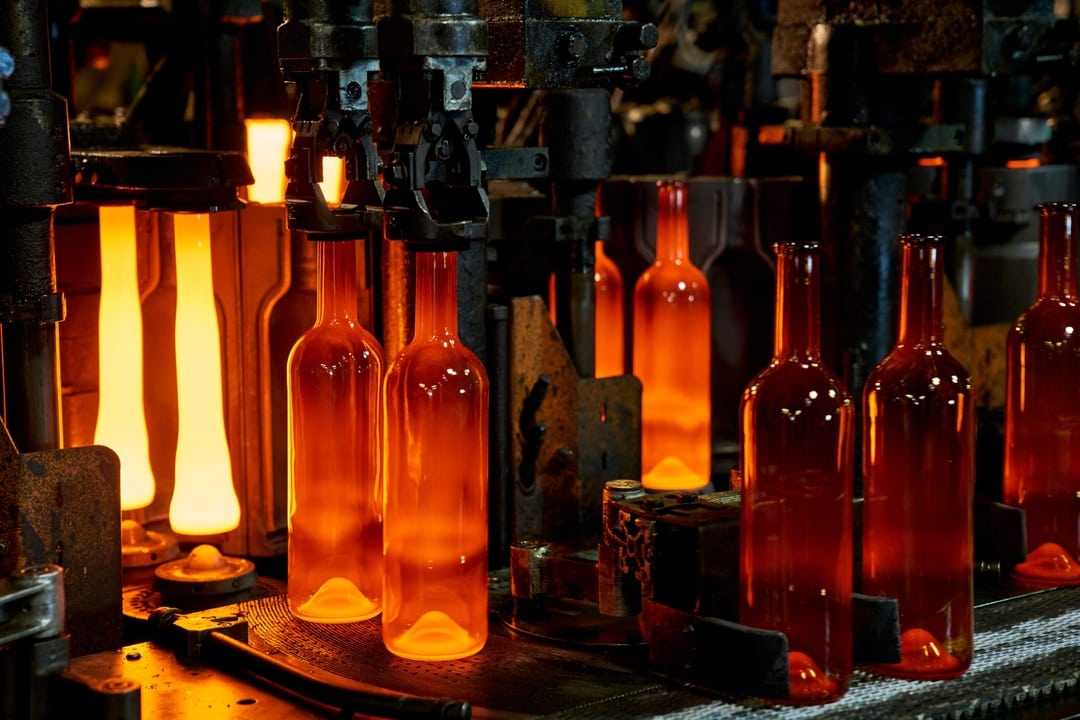
Glass blowing and moulding
Blowing and moulding the glass, listed by the DOE for the stone, clay and glass sector.
Forming
Cooling
Cooling with air; the DOE also lists open blowing for cooling among potentially inappropriate uses, with blowers and electric fans as alternatives.
Materials
Conveying
Moving materials through the plant with compressed air.
Batch
Blending and mixing
Blending and mixing of materials, listed by the DOE for the sector.
Machines
Controls and actuators
Pneumatic controls and actuators across the plant.
Furnace
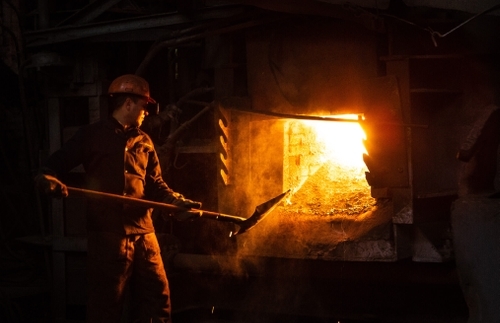
Oxy-fuel combustion
Oxygen instead of air in the burners, which a 2001 DOE paper says significantly reduces NOx emissions and the fuel used per ton of glass.
Sources: US Department of Energy and Compressed Air Challenge, Improving Compressed Air System Performance: A Sourcebook for Industry, third edition (2016), Table 1.1 and Fact Sheet 2; E. Levine (US DOE) and K. Jamison (Energetics), Oxy-Fuel Firing for the Glass Industry: An Update, ACEEE proceedings (2001); D. P. Mehta and A. Nayak (Bradley University), Recent Trends in Oxy-Fuel, Air-Fuel and Hybrid Combustion Technologies, ACEEE Summer Study on Energy Efficiency in Industry (2007).
Oxygen for glass furnaces
Three ways to supply the oxygen.
A 2001 paper by the US Department of Energy and Energetics names three primary ways to supply oxygen to oxy-fuel glass furnaces. The choice depends on costs unique to each plant, including consumption, electricity costs and distance to existing oxygen plants. Its findings, as of 2001:
On-site adsorption (VPSA)
90% to 95% oxygen
Introduced in 1991 as a point-of-use supply, VPSA made 90 to 95% purity oxygen more economical and convenient, and was generally the low-cost choice up to the 120 TPD range.
Source: Levine and Jamison, ACEEE proceedings (2001).
Cryogenic production
Above 200 TPD
Cryogenic production allows higher purity but is equipment-intensive; it generally needs too much capital to be cost-effective unless the furnace makes more than 200 tons of glass per day.
Source: Levine and Jamison, ACEEE proceedings (2001).
Delivered liquid oxygen
Not economic from 10 TPD
Merchant liquid supplies are not economic for furnaces producing at least 10 tons per day, which the paper says is the vast majority of glass plants.
Source: Levine and Jamison, ACEEE proceedings (2001).
ULTRAOX VSA delivers 75% to 95% oxygen at 50 kPa; its datasheet lists industrial furnaces, not glass furnaces specifically. Sources: DOE and Energetics, ACEEE (2001); ULTRAOX VSA datasheet.
What we supply
For the compressor room and the furnace.
Equipment that the Ultra Controlo catalogue and datasheets, and a partner maker, tie to glass, ceramics and industrial furnaces.
Sources: Ultra Controlo Industrial 2026 catalogue, pp. 6, 11, 12, 17 and 19; ULTRAOX VSA datasheet; Elmo Rietschle, L-BV2 liquid ring vacuum pump page.
One supplier. Made and serviced in Portugal.
Ultra Controlo is a Portuguese manufacturer of compressed air, vacuum and technical gas systems, with 40 years of experience. We design, assemble and test our own compressors, dryers and carbon towers in Portugal, and supply and service five partner brands.
Our own lines
ULTRASCREW compressors, ULTRASEC and ULTRADRY dryers and ULTRAK activated carbon towers.
Preventive and corrective maintenance, original spare parts and emergency support, by our own team.
Source: Ultra Controlo Industrial 2026 catalogue, pp. 3, 10, 16, 17 and 22.
Questions
Glass and ceramics: questions and answers.
What is compressed air used for in glass and ceramics plants?
The US Department of Energy sourcebook (2016) lists conveying, blending, mixing, controls and actuators, glass blowing and moulding, and cooling as example compressed air uses in the stone, clay and glass sector.
Should compressed air in a glass plant be dried as much as possible?
No. The DOE sourcebook (2016) says drying compressed air beyond the required pressure dew point results in unnecessary energy and costs, and that the higher the air quality, the more the air costs to produce.
What oxygen purity do oxy-fuel glass furnaces use?
A 2001 paper by the US DOE and Energetics describes on-site VPSA as making 90 to 95% purity oxygen more economical and convenient for glass furnaces, while cryogenic production allows higher purity but needs more capital.
How much does oxy-fuel firing reduce NOx in glass melting?
A 2007 paper at the ACEEE Summer Study, by D. Paul Mehta and Amol Nayak of Bradley University, states that with proper furnace design and burner selection a NOx reduction of 50 to 70% compared with a regenerator furnace is achievable.
Does Ultra Controlo supply oxygen for glass furnaces?
The ULTRAOX VSA datasheet lists industrial furnaces among its applications, without naming glass furnaces. The plant delivers 75% to 95% oxygen at 50 kPa, and higher pressures with an additional oxygen booster supplied on demand.